
Central Java
Central Java Travel Guide
 Central Java Travel Guide introduces a region shaped by ancient temples, Javanese culture, mountain landscapes, coastal islands, and historic cities. Central Java sits in the heart of Java and offers remarkable cultural and geographical diversity. Semarang is the provincial capital and a key gateway to the region. Travellers can discover heritage sites, traditional arts, mountain landscapes, island communities, and distinctive local cuisine.
A journey through Central Java can combine cultural discoveries with nature and coastal experiences. Borobudur provides an extraordinary introduction to Buddhist heritage and ancient Javanese architecture. Prambanan represents another important chapter through its Hindu heritage and temple architecture. Dieng offers volcanic landscapes, while Karimunjawa provides tropical islands and marine experiences. Solo and Semarang add urban culture, history, food, and traditional arts to the journey.
Explore Central Java
Discover Central Java’s Cultural and Natural Character
Central Java’s Cultural Heritage
Central Java has a strong cultural identity shaped by centuries of Javanese history. Traditional arts, crafts, architecture, music, and ceremonies remain central to local life. Wayang kulit is one of the region’s best-known traditional art forms. The performances combine storytelling, puppetry, music, and philosophical themes. Batik also remains an important expression of Javanese creativity and craftsmanship.
Traditional gamelan music is another important part of Central Javanese culture. Its instruments often accompany dance, theatre, ceremonies, and other cultural performances. Travellers can discover these traditions through museums, cultural centres, villages, markets, and traditional performances. Respectful observation can deepen understanding of Javanese heritage.
Borobudur Temple and Buddhist Heritage
Borobudur Temple is one of Central Java’s most important cultural landmarks. The monument stands in Magelang Regency and forms part of a UNESCO World Heritage property. The monument was built during the Sailendra period between the eighth and ninth centuries. Its architecture reflects Mahayana Buddhist ideas through terraces, stupas, reliefs, and symbolic design.
Borobudur forms part of a wider temple landscape with Mendut and Pawon. Together, these monuments provide a broader perspective on ancient Buddhist heritage in Java. The surrounding area also offers villages, cultural experiences, museums, galleries, and local crafts. Visitors can therefore explore more than the temple itself.
Travellers should treat Borobudur as an active religious heritage site. Appropriate behaviour and respect for Buddhist practices remain important during every visit.
Prambanan Temple and Hindu Heritage
Prambanan Temple represents another major chapter in Central Java’s cultural landscape. The complex stands near the border between Central Java and Yogyakarta. The temple complex dates from the ninth century and reflects the Hindu traditions of ancient Java. Its main temples honour Shiva, Vishnu, and Brahma.
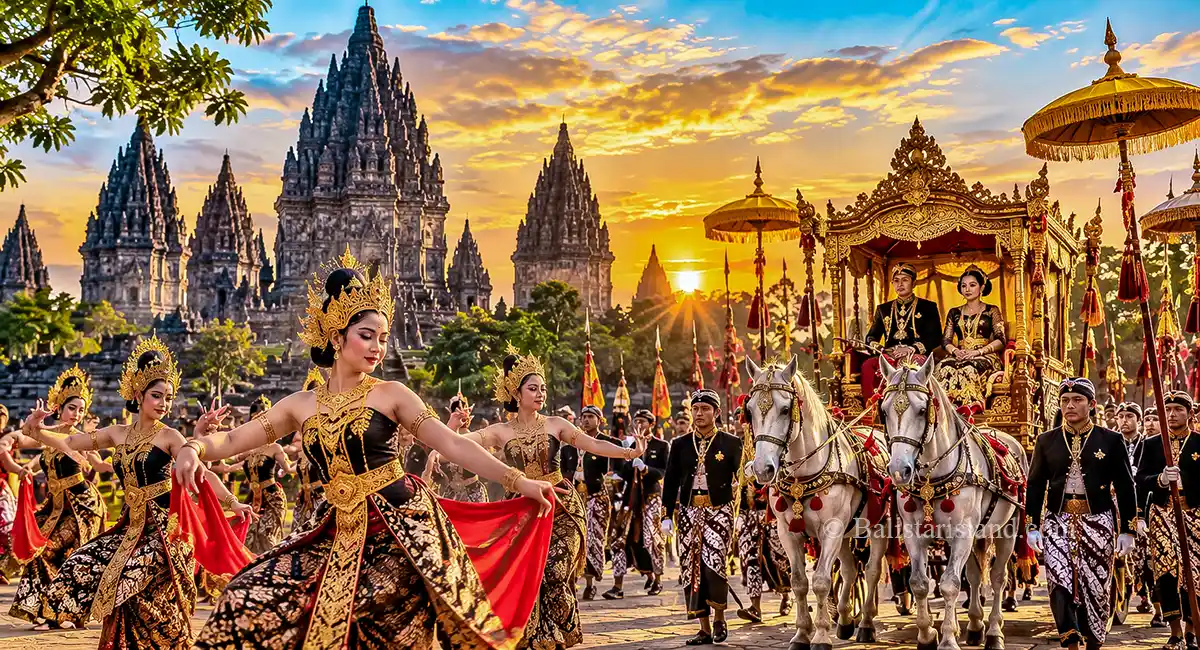
Detailed reliefs also connect the complex with the Ramayana tradition. These stories add cultural meaning to the architectural experience. Prambanan demonstrates the religious diversity that shaped Java’s historical landscape. Borobudur and Prambanan can therefore provide complementary heritage experiences.
Visitors should allow enough time to explore the wider temple area. The surrounding landscape also provides views toward nearby mountains and agricultural areas.
Dieng Plateau and Highland Landscapes
Dieng Plateau offers a completely different atmosphere from Central Java’s major temple destinations. The highland sits around 2,000 to 2,100 meters above sea level. Volcanic landscapes shape the area through craters, lakes, hills, and geothermal features. The cool climate also contrasts with Java’s warmer lowlands.
The Arjuna Temple Complex adds another historical dimension to the highland landscape. These temples provide evidence of early Hindu traditions in Central Java. Travellers can explore viewpoints, volcanic features, agricultural areas, and mountain villages. Early mornings can offer atmospheric conditions around the highland landscapes.
Dieng also has living cultural traditions connected with local communities. The region hosts cultural events that celebrate local heritage and traditions.
Semarang and Colonial Heritage
Semarang is the capital of Central Java and an important urban destination. The city combines historical districts, modern neighbourhoods, culinary traditions, and coastal character. Kota Lama Semarang provides one of the city’s most distinctive historical environments. Historic buildings reflect the city’s development during different periods.
Lawang Sewu is another recognisable landmark associated with Semarang’s architectural heritage. The building offers visitors another perspective on the city’s colonial-era history. Semarang also has a diverse culinary scene. Local dishes, traditional markets, and Chinatown provide different ways to experience the city’s food culture.
The city is a great starting point for exploring northern Central Java. Travellers can also combine Semarang with nearby cultural and coastal destinations.
Solo and Javanese Traditions
Solo, also called Surakarta, provides another important centre for Javanese culture. The city is closely associated with royal traditions, batik, performing arts, and local cuisine. Visitors can explore traditional markets, cultural venues, historic areas, and royal heritage. Batik remains central to Solo’s creative identity.
Traditional performances can provide insight into Javanese storytelling and artistic traditions. Gamelan music and dance also remain connected with cultural life. Solo’s culinary scene offers another reason to explore the city. Local dishes reflect regional tastes and long-established cooking traditions.
The wider Solo region also connects with destinations such as Sangiran, Cetho, Sukuh, and Tawangmangu. These areas provide additional opportunities for heritage and nature experiences.
Central Java’s Traditional Arts and Culture
Central Java Culture extends far beyond major heritage sites. Traditional arts remain visible through performances, crafts, ceremonies, and community activities. Wayang kulit combines puppetry with stories from Hindu epics and Javanese traditions. Performances can continue for several hours during special cultural occasions.
Batik provides another important cultural expression. Different towns have developed their own visual styles, colours, and production traditions.
Gamelan accompanies many traditional performances across Java. Its layered sounds create a distinctive musical experience. Visitors can also discover traditional crafts through workshops and local artisan communities. Buying directly from artisans can support local creative economies.
Cultural experiences become more meaningful when visitors learn about their context. Respectful participation is preferable to treating traditions as simple entertainment.
Karimunjawa and Central Java’s Coastal Islands
Karimunjawa offers a tropical island experience within Central Java. The archipelago consists of numerous islands in the Java Sea near Jepara. The islands are known for beaches, coral reefs, marine biodiversity, snorkelling, and diving. Its coastal environment strongly contrasts with Central Java’s mountain destinations.
Visitors can explore beaches, islands, mangroves, and underwater environments. Boat trips provide access to different parts of the archipelago. Karimunjawa also offers opportunities to experience island communities and local lifestyles. The slower pace can complement a cultural journey through mainland Central Java.
Marine tourism should follow responsible practices. Visitors should avoid touching coral and disturbing marine animals during snorkelling or diving.
Central Java’s Food and Local Life
Food is an important part of the Central Java experience. Each city and region has distinctive dishes shaped by local ingredients and traditions. Soto Kudus is one of the region’s well-known dishes. The light soup provides a different experience from richer regional soups found elsewhere in Indonesia.
Semarang is associated with several distinctive foods and snacks. The city’s Chinatown and traditional markets provide opportunities to discover local flavours. Getuk Goreng Sokaraja is another regional speciality associated with Banyumas. These traditional snacks are also popular choices for visitors seeking local food experiences.
Markets provide another window into everyday life. Visitors can discover fresh produce, spices, snacks, textiles, and household products. Trying local food respectfully can create a stronger connection with the destination. Travellers should also consider supporting independent restaurants and local food producers.
Best Time to Visit Central Java
The best time to visit Central Java depends on your chosen destinations and activities. Weather conditions can differ between coastal, urban, and highland areas. Drier periods can provide comfortable conditions for sightseeing and outdoor exploration. Mountain destinations may still experience changing weather throughout the day.
Early mornings can work well for temple visits and mountain landscapes. Cooler temperatures can make outdoor exploration more comfortable. Rain can affect mountain roads and outdoor activities during wetter periods. Travellers should check local conditions before visiting highland destinations.
Flexible planning can help when weather affects travel arrangements. This approach becomes especially useful when combining multiple regions.
Central Java Travel Tips
Central Java covers a large area with different travel environments. Planning your route can help reduce unnecessary travel between distant destinations. Trains provide useful connections between major cities such as Semarang and Solo. Private vehicles can offer greater flexibility for rural and mountain destinations.
Travel times can vary because road conditions and traffic change throughout the day. Allowing extra time can make multi-destination itineraries more comfortable. Comfortable footwear is useful for temples, markets, villages, and mountain areas. Light clothing works well in lowland areas, while warmer layers help in Dieng.
Respect local customs when visiting temples and cultural sites. Follow photography rules and avoid entering restricted areas. Responsible travel also matters in natural destinations. Reduce plastic waste and avoid damaging plants, coral, or historical structures. Supporting local guides, artisans, restaurants, and community businesses can benefit local economies. These choices can also create more meaningful travel experiences.
Frequently Asked Questions About Central Java
What is Central Java known for?
Central Java is known for ancient temples, Javanese culture, mountain landscapes, historic cities, islands, and distinctive cuisine.
What are the best things to do in Central Java?
Popular experiences include visiting temples, exploring mountains, discovering cultural traditions, enjoying local food, and exploring tropical islands.
What are the best places to visit in Central Java?
Popular destinations include Borobudur, Prambanan, Dieng, Semarang, Solo, and Karimunjawa. Each offers a different travel experience.
Is Borobudur Temple in Central Java?
Yes. Borobudur Temple stands in Magelang Regency, Central Java. The monument forms part of a UNESCO World Heritage property.
Is Prambanan Temple in Central Java?
Prambanan stands near the border between Central Java and Yogyakarta. The temple complex is therefore closely associated with both destinations.
What is the Dieng Plateau known for?
Dieng is known for volcanic landscapes, mountain scenery, craters, lakes, ancient temples, and cool highland conditions.
What is Central Java Culture known for?
Central Java Culture is known for batik, wayang kulit, gamelan, traditional dance, ceremonies, crafts, and Javanese heritage.
What is Solo Indonesia known for?
Solo, Indonesia, is known for Javanese traditions, royal heritage, batik, performing arts, markets, and distinctive local cuisine.
Can you visit Karimunjawa from Central Java?
Yes. Karimunjawa is part of Jepara Regency in Central Java and offers island, beach, snorkelling, and diving experiences.
How many days do you need in Central Java?
Five to seven days can cover several major destinations. Longer trips allow slower exploration across cultural, mountain, and coastal areas.