
West Papua
West Papua Travel Guide
 West Papua Travel Guide introduces the Indonesian side of New Guinea through extraordinary landscapes, wildlife, cultures, and remote destinations. In this guide, West Papua refers broadly to Indonesian New Guinea and its diverse travel regions. The region stretches from tropical islands and coral reefs to high mountains, rainforests, valleys, and southern wetlands. Travellers can discover coastal communities, Indigenous cultures, wildlife habitats, and dramatic landscapes across this vast destination.
A journey through this region can take many forms, from marine adventures to mountain exploration and cultural discovery. Raja Ampat offers spectacular islands and some of Indonesia’s richest marine environments. The Baliem Valley reveals dramatic highlands and distinctive Indigenous traditions. Lorentz National Park connects high mountains, forests, wetlands, and coastal ecosystems across an enormous protected landscape. Other destinations include Manokwari, Sorong, Jayapura, Biak, Asmat, and Merauke.
Explore West Papua
Discover West Papua’s Wild and Cultural Character
West Papua and Western New Guinea
West Papua describes a much broader geographical area than the modern province of West Papua. For international travellers, the term can refer to the Indonesian part of New Guinea. This area now includes six Indonesian provinces with distinct landscapes and communities.
The western part of New Guinea contains remarkable geographical diversity. Tropical islands surround coastal areas, while extensive forests cover inland regions. High mountain ranges rise dramatically above valleys and lowland environments.
This diversity creates a wide range of travel experiences. Visitors can explore coral reefs, rainforest trails, mountain valleys, traditional communities, and historic coastal towns.
Travel between regions can require considerable planning. Distances are large, infrastructure varies, and some destinations remain difficult to access. Local guides can make remote journeys safer and more meaningful.
Raja Ampat and Its Marine Landscapes
Raja Ampat is one of the most famous destinations within the wider West Papua travel region. Administratively, the archipelago now belongs to Southwest Papua Province.
The islands are known for karst formations, coral reefs, clear waters, and exceptional marine biodiversity. The archipelago contains more than 1,500 smaller islands, cays, and shoals around four major islands.
Wayag provides spectacular views across karst islands and turquoise waters. Misool offers another landscape of limestone formations, lagoons, forests, and marine environments.
Snorkelling and diving remain major reasons to visit Raja Ampat. Visitors can explore coral reefs, encounter marine species, and discover distinctive underwater landscapes.
Responsible marine tourism is essential in this fragile environment. Visitors should avoid touching coral and maintain appropriate distances from marine animals. Local conservation practices also deserve respect during island visits.
Sorong and the Gateway to Eastern Indonesia
Sorong serves as an important gateway for travellers exploring the wider Papua region. The city is the capital of Southwest Papua Province and provides connections toward Raja Ampat.
Sorong also has its own cultural and historical character. Its location has supported trade, transportation, and connections between coastal communities.
Travellers often use Sorong as a starting point for longer journeys. From here, different routes can lead toward islands, coastal destinations, and other parts of Papua.
The city can therefore function as both a travel gateway and an introduction to eastern Indonesia. Local markets and food experiences can add another perspective to the journey.
Manokwari and the Arfak Mountains
Manokwari is the capital of West Papua Province. The city provides access to coastal environments, historical sites, and mountain destinations.
The nearby Arfak Mountains offer a contrasting environment with cooler temperatures and forested highlands. Traditional communities continue to maintain local customs within this mountain landscape.
The region also attracts birdwatchers searching for distinctive Papuan species. Bird-of-paradise species are among the wildlife associated with these forest environments.
Nature experiences in the Arfak Mountains often involve local guides and community-based travel. This approach can provide better access while supporting local knowledge and livelihoods.
Cenderawasih Bay and Marine Wildlife
Cenderawasih Bay creates another major marine destination within Indonesian New Guinea. The national park covers extensive marine and coastal ecosystems across Papua and West Papua.
The area supports coral reefs, islands, coastal habitats, and a wide range of marine species. Whale shark encounters are among the region’s highlights.
Snorkelling and diving can reveal another side of West Papua beyond its forests and mountains. The underwater environment provides opportunities for wildlife observation and photography.
Visitors should follow local guidelines when encountering marine animals. Responsible behaviour helps reduce disturbance and protects sensitive ecosystems.
Baliem Valley and Highland Papua
The Baliem Valley offers one of Papua’s most distinctive highland experiences. The valley lies at around 1,600 meters above sea level and is surrounded by dramatic mountain landscapes.
Wamena provides the main access point for travellers visiting the valley. Trekking can reveal traditional communities, agricultural landscapes, markets, and mountain scenery.
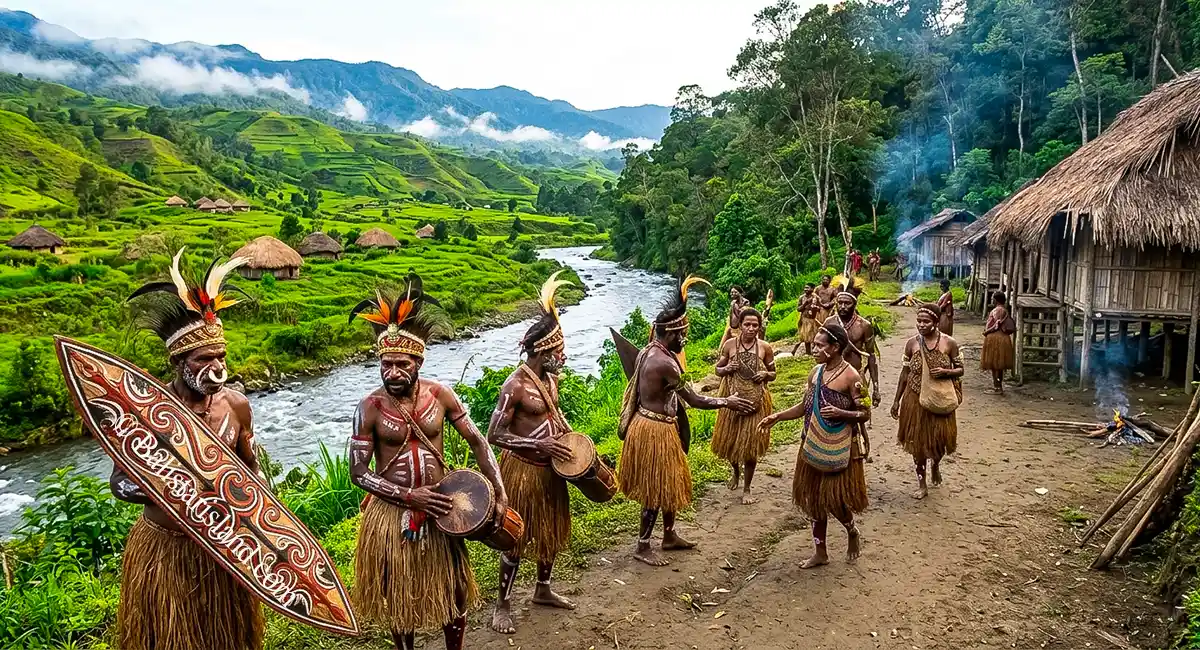
The valley is associated with the Dani people and other Indigenous communities. Visitors can learn about local lifestyles through guided cultural experiences and village visits.
Travellers should approach cultural encounters with respect. Do not treat traditions as mere performances for visitors. Local guidance can help create more appropriate and meaningful experiences.
Lorentz National Park and Papua’s Wild Interior
Lorentz National Park represents the enormous ecological diversity of Indonesian New Guinea. The protected landscape covers about 2.35 million hectares and reaches from high mountains toward the Arafura Sea.
The park contains alpine environments, mountain forests, lowland forests, wetlands, mangroves, and coastal ecosystems. This extraordinary range makes Lorentz important for both conservation and scientific research.
Puncak Jaya, also called Carstensz Pyramid, rises within the high mountain landscape. The summit reaches approximately 4,884 meters according to UNESCO documentation.
Lorentz also has strong connections with Indigenous communities. Amungme, Dani, Moni, Nduga, Asmat, Kamoro, and other communities live within or around the wider landscape.
Access varies greatly across this enormous region. Timika, Wamena, Nabire, Enarotali, and Merauke offer access to different areas.
Papua’s Coastal Islands and Northern Destinations
Northern Papua offers another collection of islands and coastal destinations. Jayapura provides an important urban centre near Papua’s northeastern coastline.
Biak and nearby islands combine beaches, marine environments, local communities, and historical sites. The region also contains important World War II heritage associated with the Pacific theatre.
Island destinations can provide a slower travel experience than larger mainland cities. Visitors can combine coastal exploration with local food, village visits, and marine activities.
These destinations demonstrate that West Papua extends far beyond the famous Raja Ampat islands. Each region contributes its own landscapes and cultural character.
Asmat, Merauke, and Southern Papua
Southern Papua offers a very different environment from the mountains and northern islands. Wetlands, rivers, forests, mangroves, and coastal landscapes shape many areas.
Asmat is especially known for distinctive woodcarving traditions and Indigenous cultural heritage. Cultural experiences should focus on learning and respect, not treating traditions as simple souvenirs.
Merauke provides an important urban centre in southern Papua. The surrounding region includes extensive lowland landscapes and ecosystems connected with the Arafura Sea.
Travel in southern Papua can require additional planning because distances are large. Local knowledge becomes especially valuable when visiting remote communities and natural areas.
West Papua Culture and Local Communities
West Papua contains many Indigenous communities with different languages, traditions, histories, and cultural practices. No single tradition represents all communities across Indonesian New Guinea.
Traditional architecture, weaving, carving, music, dance, food, and ceremonies provide different ways to understand local cultures. Each community has its own context and customs.
The noken is a well-known example of Papuan cultural heritage. Traditional weaving can carry practical, social, and cultural significance within different communities.
Visitors should ask permission before photographing people or entering culturally important areas. Respect for local customs should remain central to every cultural experience.
Supporting local guides, artisans, homestays, and community businesses can also contribute to local economies. Responsible tourism can create stronger connections between visitors and host communities.
Papua Wildlife and Bird of Paradise
Papua contains exceptional wildlife diversity across forests, mountains, wetlands, and marine environments. Birdwatching is particularly attractive because several distinctive bird species occur across the region.
Bird-of-paradise species represent some of Papua’s most recognisable wildlife. Observing these birds requires patience and careful movement within forest habitats.
Marine environments offer another dimension of wildlife experiences. Raja Ampat and Cenderawasih Bay provide opportunities to observe coral ecosystems and marine species.
Wildlife encounters can never be guaranteed. Travellers should allow animals to behave naturally and avoid feeding or approaching them.
Best Time to Visit West Papua
The best time to visit West Papua depends heavily on your chosen destination and activities. Weather conditions can differ between coastal, mountain, and island environments.
Marine activities depend on sea conditions, visibility, and local weather. Mountain travel can also change with rainfall and road conditions.
Birdwatching often benefits from early starts and patient observation. Cultural journeys may take longer because remote communities can require longer travel.
Because the region is so large, travellers should plan around specific destinations rather than one general season. Local weather information can help you make better travel decisions.
West Papua Travel Tips
West Papua requires more preparation than many established Indonesian destinations. Travel distances can be long, and infrastructure varies by region.
Domestic flights often connect major hubs with remote areas. Boat travel is often essential for many island and coastal destinations.
Local guides can help with transportation, cultural etiquette, wildlife observation, and remote routes. Their knowledge can also improve the quality of nature-based experiences.
Travellers should pack according to their destination. Lightweight clothing suits lowland areas, while warmer layers can help in highland environments.
Comfortable walking shoes are useful for trails and village visits. Waterproof bags can also protect equipment during boat journeys and tropical rain.
Respect local communities and protected environments throughout the journey. Avoid plastic waste, damaging coral, disturbing wildlife, or entering restricted areas.
A journey through West Papua is often more rewarding when travellers move slowly. Allowing additional time creates space for unexpected discoveries and local interactions.
Frequently Asked Questions About West Papua
What is West Papua known for?
West Papua is known for rainforests, mountains, islands, marine biodiversity, wildlife, and diverse Indigenous cultures. The wider region includes many distinctive destinations across Indonesian New Guinea.
What are the best things to do in West Papua?
Popular experiences include diving, snorkelling, birdwatching, trekking, cultural visits, island exploration, and wildlife observation.
What are the best places to visit in West Papua?
Major destinations include Raja Ampat, Sorong, Manokwari, the Arfak Mountains, Cenderawasih Bay, Baliem Valley, Wamena, Lorentz National Park, Biak, Asmat, and Merauke.
Is Raja Ampat part of West Papua?
Raja Ampat is currently part of Southwest Papua Province. It remains an important destination within the wider Western New Guinea travel region.
What is West Papua known for culturally?
The region is known for diverse Indigenous cultures, traditional arts, weaving, carving, music, dance, food, and strong relationships with local environments.
Where can you see Bird of Paradise in West Papua?
The Arfak Mountains offer opportunities for birdwatching and searching for Bird of Paradise species. Local guides can help visitors find suitable observation areas.
What is the Baliem Valley known for?
The Baliem Valley is known for mountain scenery, agricultural landscapes, trekking, and Indigenous cultures. Wamena provides the main access point.
What is Lorentz National Park known for?
Lorentz National Park is known for extraordinary ecological diversity across mountains, forests, wetlands, mangroves, and coastal environments.
How many days do you need in West Papua?
The ideal duration depends on your destinations. A focused island trip takes less time than a journey that combines mountains, culture, wildlife, and remote regions.
Is West Papua suitable for first-time visitors?
West Papua can suit travellers seeking nature, wildlife, culture, and adventure. Careful planning and local guidance are particularly useful for remote destinations.