
Bali archaeological heritage is more than temples and rituals. The island is also home to ancient sites that reveal its long journey from the megalithic age to the Hindu-Buddhist era. Historical tourism in Bali brings travelers beyond beaches and nightlife, into villages, caves, and temples where stones, carvings, and sacred objects tell stories of early civilizations. Visiting these places is not only about exploring ruins but also about connecting with traditions that continue to shape Balinese culture today.
Ancient Relics Hidden in Gianyar: The Land of Megaliths
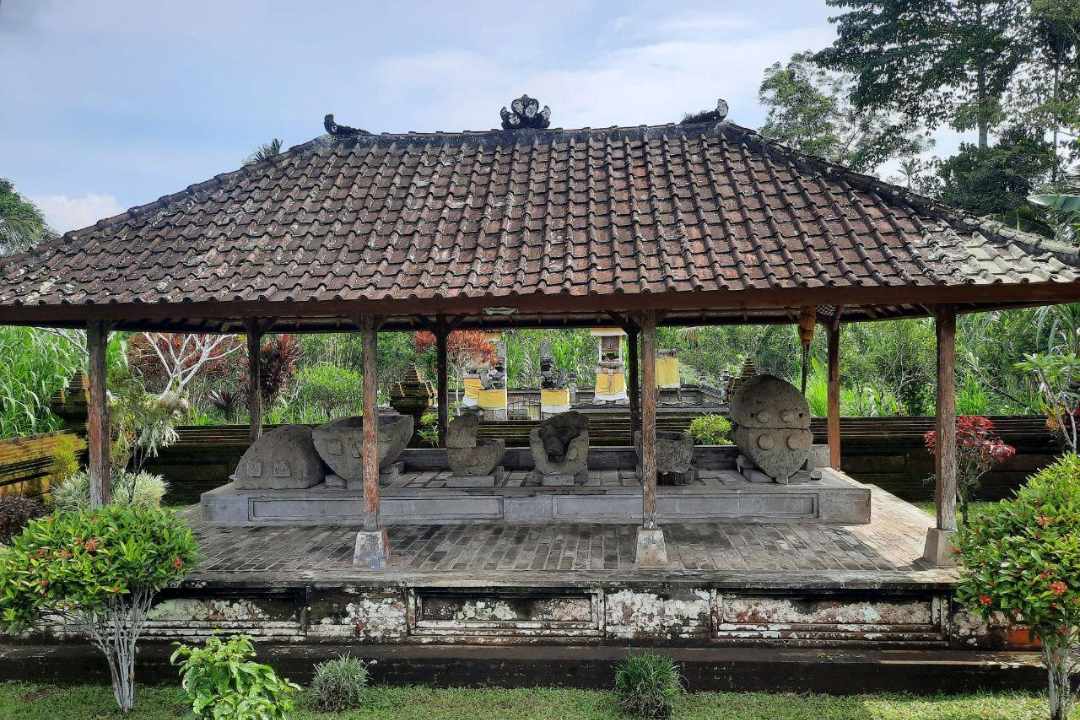
Sarkofagus Gianyar: The Stone Coffins of Ancestors
Gianyar stands as the heart of Bali’s cultural past. In Blahbatuh, Pejeng, and nearby villages, researchers discovered many sarcophagi. Ancient Balinese used these stone coffins for burials, placing bones and grave offerings like beads and ornaments inside. Each discovery opens a window into how they honored their ancestors with respect and rituals. Today, museums and heritage sites preserve and display several sarcophagi, giving researchers and visitors a chance to learn directly from the past. This heritage shows how ancient sites in Bali reveal more than religion—they reflect daily life and the belief system of Bali’s early societies.
Bulan Pejeng: The World’s Largest Bronze Drum
Still in Gianyar, at Pura Penataran Sasih in Pejeng, stands one of Bali’s most iconic relics, the Bulan Pejeng. This giant bronze drum, over 2,000 years old, is the largest known drum of its kind in the world. Its presence proves that Bali was connected to wider Southeast Asian trade and cultural routes during the Bronze Age. Even today, Bulan Pejeng is not just an artifact but also a sacred object, used in ceremonies and treated with reverence. For travelers, this combination of archaeology and living tradition makes it a highlight of historical tourism in Bali.
Sacred Caves and Temples: Symbols of Faith and Power
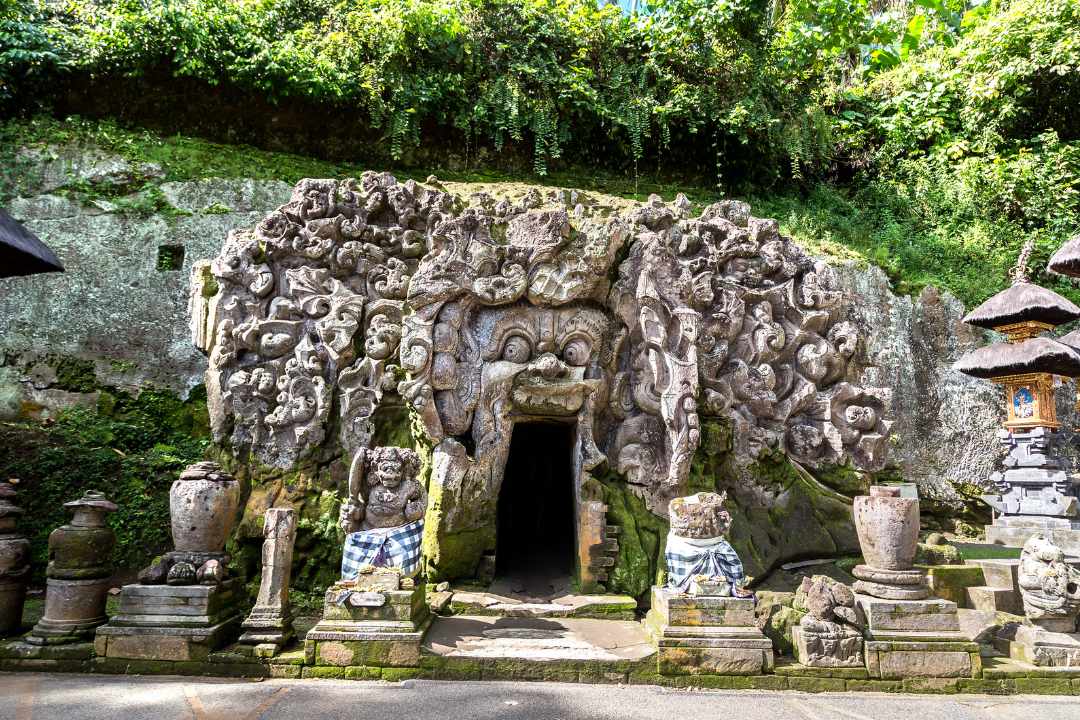
Goa Gajah: The Elephant Cave with Mystical Carvings
Dating back to the 11th century, Goa Gajah is a fascinating site near Ubud. Its entrance, carved with the face of a giant creature, draws visitors into a small cave holding lingga-yoni symbols and Buddhist relics. This unique blend shows the syncretism of Hinduism and Buddhism in Bali’s past. Around the cave, bathing pools and meditation areas remind travelers of the spiritual practices that shaped local culture. Goa Gajah is well-restored and accessible, making it one of the most visited ancient sites in Bali.
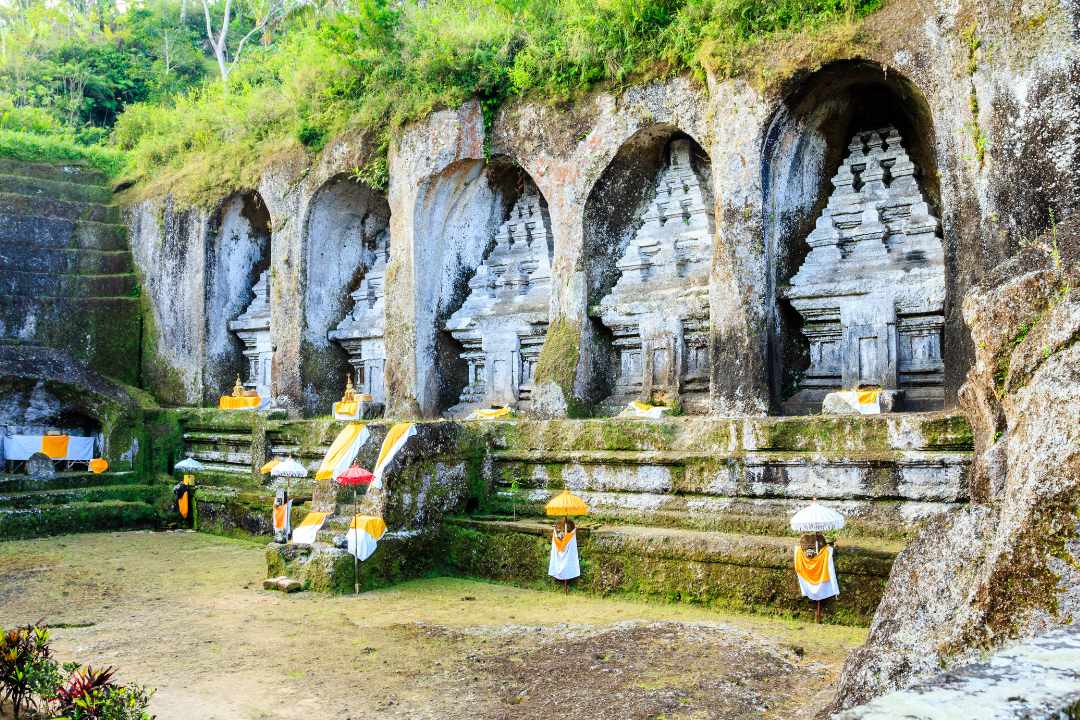
Gunung Kawi: Temples Carved Into Stone Cliffs
In Tampaksiring, Gunung Kawi Temple offers a dramatic setting. The shrines, carved directly into the cliffside along the Pakerisan River, are dedicated to King Anak Wungsu and his family. Inscriptions found here confirm the royal connection, and locals still believe the river nearby holds purifying power. Visitors not only admire the scale of the rock-cut temples but also experience the tranquil landscape of rice terraces and flowing water. This combination of history and natural beauty makes Gunung Kawi one of the most remarkable destinations for historical tourism in Bali.
Villages and Living Traditions: The Bali Aga Legacy
Pedawa Village: Traces of Megalithic Culture
Far to the north, in Buleleng, Pedawa Village offers another layer of Bali’s archaeological story. Known as a Bali Aga village, Pedawa has roots stretching back to the megalithic era. Archaeologists have found sarcophagi and other relics here, supporting the idea that ancient societies thrived in this region. The village is also rich in traditions, from unique stone structures to special cuisine like Sate Keladi. Walking through Pedawa, travelers see how ancient heritage is woven into daily life. Unlike ruins preserved in museums, Pedawa lives and breathes its history, offering a rare chance to experience Bali archaeological heritage firsthand.
Temples Above the Clouds: The Spiritual Heights of Bali
Pura Puncak Penulisan: One of Bali’s Oldest Temples
At 1,745 meters above sea level on the rim of Batur Caldera lies Pura Puncak Penulisan, one of the oldest temples in Bali. Its design is unique, built in pyramid-like terraces symbolizing the seven realms of existence. The temple houses ancient stone statues, inscriptions, and relics from the megalithic to the Majapahit period. These artifacts reflect centuries of spiritual practice, from early Balinese kings to Hindu-Javanese influences. For those who make the climb, the temple not only offers history but also sweeping views of the mountains. It stands as a symbol of how ancient sites in Bali connect nature, spirituality, and history in one sacred space.
Stories from the West: Discoveries at Gilimanuk
Gilimanuk Site: Daily Life of the Ancients
On Bali’s western tip, the Gilimanuk site has revealed pottery, beads, bones, and even gold leaf used in burial practices. Archaeologists believe the artifacts show both everyday life and ritual traditions of early Balinese communities. Items like bronze tools and fishing weights prove that these people lived with both skill and spiritual depth. Gilimanuk highlights the human side of archaeology, reminding us that behind each object was a person, a family, and a community that contributed to the island’s story. Visiting this site deepens the meaning of Bali archaeological heritage, showing that history is not just about kings and temples but also about ordinary people.
Why Explore Bali’s Ancient Heritage?
Bali is famous worldwide for beaches, nightlife, and spirituality, but its archaeological treasures remain less known. Exploring these sites adds depth to any journey. It gives visitors a chance to connect with stories thousands of years old, to see how traditions evolved, and to experience how the past still shapes the present. For history lovers, these places provide rare insights. For casual travelers, they offer memorable experiences beyond the typical tourist path.
Discover Bali’s Ancient Heritage: Archaeological Sites for Travelers and Student Learning
Bali archaeological heritage offers more than sacred temples and megalithic relics. These ancient sites are not only treasures for cultural tourism but also serve as living classrooms for students and university groups who study history, archaeology, or anthropology. Exploring Bali’s ancient sites combines education with travel, giving both visitors and young scholars a deeper understanding of the island’s long journey from the megalithic age to the Hindu-Buddhist era.
Preserving the Past for the Future
These ancient sites are not only attractions but also fragile pieces of heritage. Local communities, archaeologists, and the government work to protect them, balancing preservation with tourism. Visitors can support this effort by respecting rituals, following local rules, and appreciating the cultural value of each place. By doing so, they help ensure that historical tourism in Bali remains sustainable, allowing future generations to enjoy and learn from these treasures.


Comment (0)