
Mount Bromo Tour experiences are welcoming travellers again now that Bromo Tengger Semeru National Park has reopened on 20 August 2026. Authorities reopened the popular East Java destination after bringing recent forest and land fires under control. Therefore, travellers can once again discover Bromo’s famous sunrise, volcanic scenery, Sea of Sand, savanna, and rolling hills. Moreover, August remains an attractive time to visit because the dry season often brings clearer mornings and beautiful golden light. Whether you are planning a short sunrise trip or a longer East Java adventure, Bromo offers plenty to experience beyond its famous volcano.
Mount Bromo has long ranked among Indonesia’s most recognisable natural attractions. Yet, the destination offers much more than a single mountain view.
During one journey, travelers can experience chilly highlands, dramatic volcanic terrain, open grasslands, and remarkable viewpoints. In addition, Bromo is easily connected to waterfalls, cities, and other natural attractions across East Java.
So, with tourism operating again, what should travelers know before planning a visit?
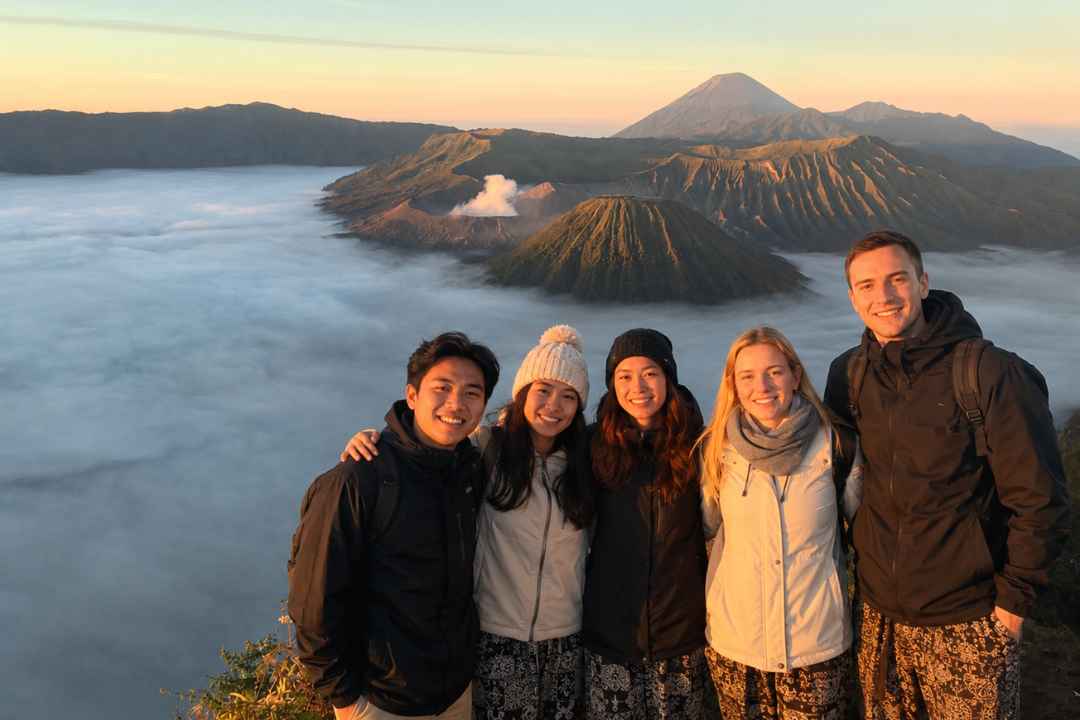
Mount Bromo Reopens After the August 2026 Fire
Bromo Tengger Semeru National Park officially reopened for tourism on Thursday, 20 August 2026.
The reopening followed a temporary closure due to forest and land fires in parts of the national park. All tourist entrances had closed from 8 August as authorities focused on firefighting and visitor safety.
After monitoring and evaluating post-fire conditions, the Bromo Tengger Semeru National Park authority confirmed that visitors could return.
The reopening also came with strict environmental reminders. Travellers must follow officers’ instructions, keep the area clean, and avoid activities that could cause another fire. In particular, visitors must not build campfires or discard cigarette butts or other potential ignition sources.
What the Reopening Means for Your Mount Bromo Tour
For travellers, the reopening means a Mount Bromo Tour can once again become part of an East Java itinerary.
The park authority set the daily visitor quota at 2,752 people around the time of the reopening. In addition, travellers can arrange their tickets through the national park’s official online booking system. Booking in advance is a good idea, especially for weekends and busy holiday periods.
Meanwhile, travellers should remember that the landscape recently experienced a major environmental event. Some affected areas may take time to recover. Therefore, visitors should respect restricted zones and follow every instruction from park officers.
The reopening offers a chance to enjoy Bromo again. At the same time, it highlights the importance of protecting this remarkable environment.
What to See on a Mount Bromo Tour
A Mount Bromo Tour usually begins long before most travellers would normally wake up. In the early hours, visitors travel through the highlands by local 4WD vehicle. The surrounding landscape remains dark, and temperatures can feel surprisingly cold.
Then, slowly, the horizon begins to brighten. For many travellers, that moment becomes the beginning of an unforgettable East Java adventure.
1. Watch a Golden Sunrise Over Bromo
Sunrise is undoubtedly one of Bromo’s biggest attractions. Visitors usually reach a viewpoint before dawn. Then, as the first light appears, the surrounding mountains slowly emerge from darkness.
On a clear morning, golden light spreads across the volcanic landscape. Mist may remain lower in the caldera, while mountain peaks rise above the horizon.
The scenery can be spectacular. However, weather conditions can change quickly. Even during the dry season, a perfect sunrise is never guaranteed.
Therefore, consider sunrise one highlight of the journey rather than the only reason to visit Bromo. After all, several very different landscapes await once you descend from the viewpoint.
2. Discover the Widodaren Landscape
After sunrise, the journey can continue toward the dramatic landscape around Widodaren.
Here, open terrain meets steep mountain formations. Meanwhile, changing morning light creates different colours and shadows across the landscape. The scenery feels far removed from Indonesia’s tropical beaches and rice fields.
Moreover, the 4WD journey becomes part of the adventure. As vehicles descend from the highlands, travellers begin to see the enormous scale of the Tengger volcanic environment.
It is also a great area for photography. However, always follow local access rules and avoid entering restricted sections.
3. Cross the Sea of Sand and Pasir Berbisik
One of the most distinctive parts of Bromo is its vast Sea of Sand. The dark volcanic plain stretches across the caldera, creating an almost otherworldly landscape.
Within this environment, visitors often stop at Pasir Berbisik, or Whispering Sands. The name refers to the subtle sound created as wind moves across the sandy terrain.
Unlike lush tropical landscapes, Pasir Berbisik feels open, minimal, and dramatic. Mountains rise beyond the volcanic sand, creating an excellent natural backdrop.
During the dry season, however, passing vehicles can create plenty of dust. Therefore, travellers who are sensitive to dust may want to bring a mask or face covering.
4. Enjoy Bromo’s Open Savanna
Bromo is not entirely covered by dark volcanic sand. Continue toward the savanna, and the scenery changes again.
Wide grasslands stretch between the surrounding hills. Depending on the season, the landscape may appear green, golden, or brown.
During wetter periods, vegetation can become lush. However, later in the dry season, the grass often takes on warmer colours.
The August 2026 fires also affected parts of the wider national park. As a result, visitors may notice areas at different stages of natural recovery. Rather than seeing this only as a change of scenery, it serves as a reminder that national parks are living ecosystems.
5. Explore the Famous Teletubbies Hills
Another popular stop is the rolling landscape commonly known as Teletubbies Hills.
Its gentle hills create a strong contrast with the flat Sea of Sand. Depending on seasonal conditions, the area can appear bright green or take on warmer dry-season tones.
This variety is one reason a Bromo journey can feel surprisingly diverse. In only a few hours, travellers can move from a mountain sunrise to volcanic sand and rolling grasslands.
That combination makes Bromo much more than a simple sunrise destination.
Best Time for a Mount Bromo Tour
Choosing the right season can make a significant difference to your Mount Bromo Tour.
For many travellers, the dry season is particularly attractive. East Java generally experiences drier weather around midyear, and August falls within this period.
Therefore, visitors often have a better chance of experiencing clearer morning views. However, mountain weather always remains unpredictable. Clouds, mist, wind, and changing temperatures can still occur.
Why August Can Deliver Beautiful Bromo Views
August is popular partly because of its dry-season conditions.
Clearer mornings can create beautiful sunrise views across the Tengger landscape. Meanwhile, lower rainfall can make outdoor exploration more comfortable.
However, August has another surprising characteristic: cold temperatures. During the dry season, temperatures in the Bromo highlands can drop sharply before sunrise. So, do not prepare for Bromo as if you were heading to a tropical beach.
Prepare for Bromo’s Surprisingly Cold Mornings
Visitors often arrive at the viewpoint well before sunrise. At that hour, the mountain air can feel extremely cold. Therefore, bring a warm jacket, long trousers, and closed shoes.
Additional layers can also help. For example, a scarf, hat, or gloves may make the early-morning wait much more comfortable. Later, the temperature usually becomes more pleasant as the sun rises. As a result, several removable layers work better than one extremely heavy outfit.
Comfortable footwear is also important because parts of the journey involve volcanic sand and uneven ground.
Dry Season Means Greater Fire Awareness
The same dry conditions that can bring clearer views also increase fire risk. Dry grass and vegetation can ignite quickly. In August 2026, difficult terrain, steep slopes, limited water sources, and dry conditions created major challenges for firefighters responding to the Bromo fires.
Consequently, responsible behaviour is essential.
Do not light fires inside prohibited areas. Never discard cigarette butts on the ground. Likewise, avoid leaving materials that could ignite.
If you notice smoke, embers, or another possible sign of fire, report it to a park officer immediately.
Extend Your Mount Bromo Tour Across East Java
A Mount Bromo Tour does not need to end once your sunrise adventure finishes. In fact, Bromo can become the starting point for a much bigger East Java journey.
The region offers waterfalls, highland towns, cities, volcanic landscapes, and rural scenery. Therefore, travellers with several extra days can create a much more varied itinerary.
Discover Madakaripura Waterfall
Madakaripura Waterfall is a natural addition to a Bromo journey, especially for travellers passing through the Probolinggo area. The setting could hardly feel more different from Bromo.
Instead of open volcanic terrain, visitors enter a green valley surrounded by towering cliffs. Water cascades down the rock walls, creating a dramatic tropical atmosphere.
Expect to get wet during the experience. Therefore, waterproof protection for your phone, camera, and other valuables can be useful.
The contrast is also what makes the combination attractive. You can experience a volcanic landscape and lush waterfall environment during the same East Java journey.
Continue Your Journey to Malang and Batu
For travellers seeking a blend of nature and city experiences, consider continuing to Malang and Batu.
Malang offers heritage architecture, local cuisine, colourful neighbourhoods, and a cooler atmosphere than many other Indonesian coastal cities.
Nearby Batu provides another type of experience. The highland city is known for family attractions, museums, agricultural areas, and mountain scenery.
This combination works especially well for families or groups who want a slower pace after an early Bromo sunrise adventure.
Moreover, spending time in Malang allows travellers to experience another side of East Java beyond its famous natural attractions.
Chase the Spectacular Tumpak Sewu Waterfall
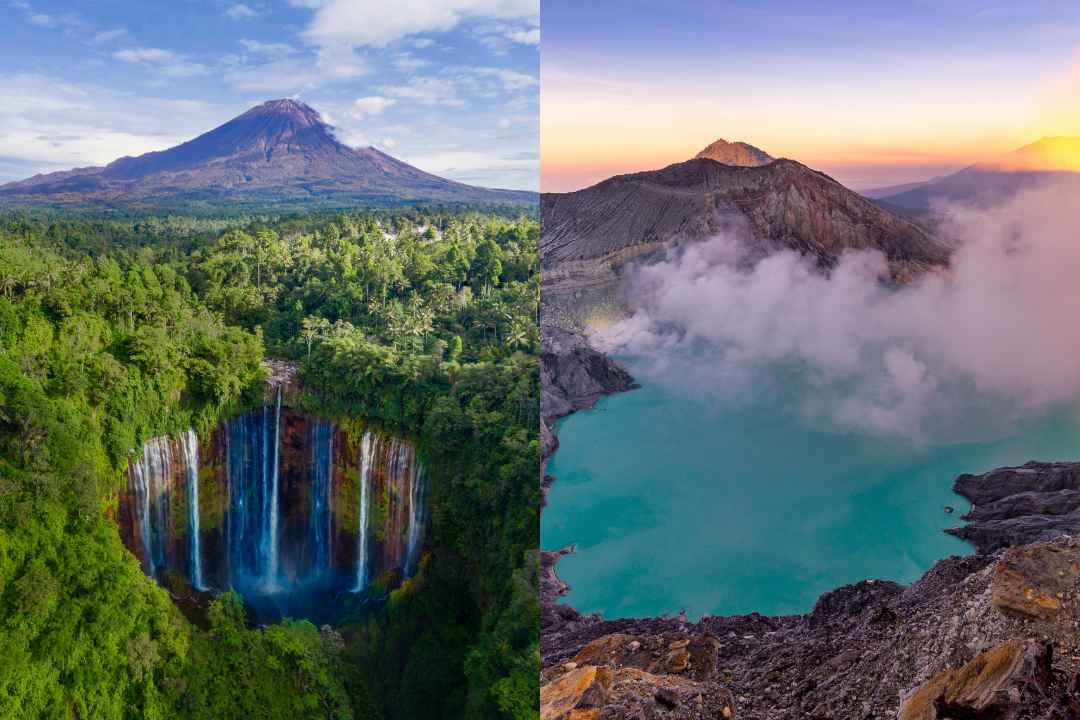
Adventure travellers can continue toward Tumpak Sewu Waterfall in the Lumajang area. The waterfall forms a remarkable semicircular curtain of water across a high green cliff.
From the upper viewpoint, visitors can already appreciate its scale. However, adventurous travellers may also explore farther down when local conditions allow. The lower journey requires more effort.
Steep trails, wet rocks, streams, and slippery surfaces can make the route physically demanding. Therefore, wear suitable footwear and consider your fitness level before descending.
Weather conditions also matter. Heavy rain can make the area more challenging. Still, for travellers seeking dramatic landscapes, Tumpak Sewu can become one of the highlights of an East Java adventure.
Add Ijen Crater to Your East Java Adventure
Travellers with more time can continue farther east toward Ijen. Located near Banyuwangi, the Ijen volcanic complex offers another completely different landscape. The crater is famous for its turquoise-colored acidic lake and dramatic volcanic surroundings.
Moreover, Ijen works particularly well for travellers connecting East Java with Bali. You can start in Bali, cross to Banyuwangi, explore Ijen, and continue west through East Java toward Bromo.
Alternatively, travellers can begin in Surabaya or Malang, visit Bromo, continue east, and eventually finish the journey in Bali. This makes the region ideal for an overland Indonesian adventure.
Practical Mount Bromo Tour Tips for 2026
Good preparation can make your Mount Bromo Tour more enjoyable.
First, arrange your entrance ticket before travelling. Around the August 2026 reopening, Bromo Tengger Semeru National Park maintained a daily visitor quota of 2,752.
Next, prepare for an early start. Sunrise trips usually require travellers to leave their accommodation long before dawn.
Warm clothing is essential. Although Indonesia has a tropical climate, Bromo’s elevation creates much colder conditions.
Also, wear comfortable closed shoes. You may encounter sand, dust, and uneven terrain during the journey.
Bring drinking water as well. However, remember to take your rubbish with you until you find an appropriate disposal point.
Plan Your Mount Bromo Tour in Advance
Advance planning is particularly helpful during weekends and popular holiday periods.
Start by confirming your entrance ticket. Then, arrange transportation and accommodation according to your preferred route. Travellers should also consider where they will stay the night before sunrise.
Staying closer to Bromo can reduce travel time in the early morning. Meanwhile, travellers coming from farther away need to allow enough time to reach the area before dawn.
If you plan to continue to Tumpak Sewu, Malang, Ijen, or Bali, plan the route carefully. Travel times across East Java can be longer than they appear on a map.
Therefore, a well-planned itinerary can make the overall journey much more comfortable.
Travel Responsibly After the 2026 Fire
The recent fire makes responsible tourism especially important. Bromo Tengger Semeru National Park has reminded visitors to follow all instructions from officers and avoid activities that could trigger another fire.
Do not create open fires. Never leave cigarette butts behind. Furthermore, do not damage plants or enter restricted areas. Visitors should also remember that Bromo is more than a scenic tourism destination.
The Tengger highlands are home to local communities with longstanding cultural and spiritual connections to the landscape. Therefore, respect local traditions, religious activities, and community spaces during your journey.
A responsible traveller does not simply take photographs. Instead, they help preserve the destination they came to enjoy.
Make Your Mount Bromo Tour Unforgettable
A Mount Bromo Tour offers much more than a famous sunrise.
The experience takes travellers through some of East Java’s most distinctive scenery. You can watch golden morning light reveal the mountains, cross the Sea of Sand, explore Pasir Berbisik, and discover the changing colours of the savanna.
Meanwhile, nearby destinations provide even more reasons to stay longer.
Madakaripura adds a tropical waterfall experience. Malang and Batu bring city and highland attractions into the journey. Tumpak Sewu offers another spectacular natural landscape, while Ijen provides an opportunity to continue to eastern Java and Bali.
The reopening of Bromo on 20 August 2026 marks an important new chapter following the recent forest and land fires. Tourism has returned, but environmental awareness remains essential.
Therefore, visitors should enjoy the destination while respecting its recovery. Whether you are planning a quick sunrise experience or a longer journey across East Java, careful planning can turn your Mount Bromo Tour into one of the most memorable parts of an Indonesian holiday.
Bromo is welcoming travellers again. Come for the sunrise, stay for the adventure, and help protect the extraordinary landscape along the way.

Comment (0)