
Royal Palaces in Bali reveal a fascinating side of the island that goes far beyond beaches, temples, and tropical landscapes. Behind carved gates and peaceful courtyards, these historic puri tell stories of Bali’s former kingdoms. At the same time, many continue to play a role in the island’s cultural life. Rather than having one single royal palace, Bali has several royal residences connected to different kingdoms and noble families.
Today, travellers can explore elegant courtyards, admire traditional architecture, discover royal water gardens, and experience cultural performances. Moreover, some royal families still maintain connections with their ancestral palaces and local communities. Whether you are visiting Bali for the first time or looking for a deeper cultural experience, these seven royal landmarks offer a fascinating journey into the island’s living heritage.
What Is a Puri? Understanding Royal Palaces in Bali
Before exploring the palaces themselves, it helps to understand what a puri means.
In Bali, a puri traditionally refers to a royal or noble residence. Historically, different kingdoms and royal houses developed across the island. As a result, places such as Ubud, Karangasem, Klungkung, Badung, and other regions developed their own royal centres.
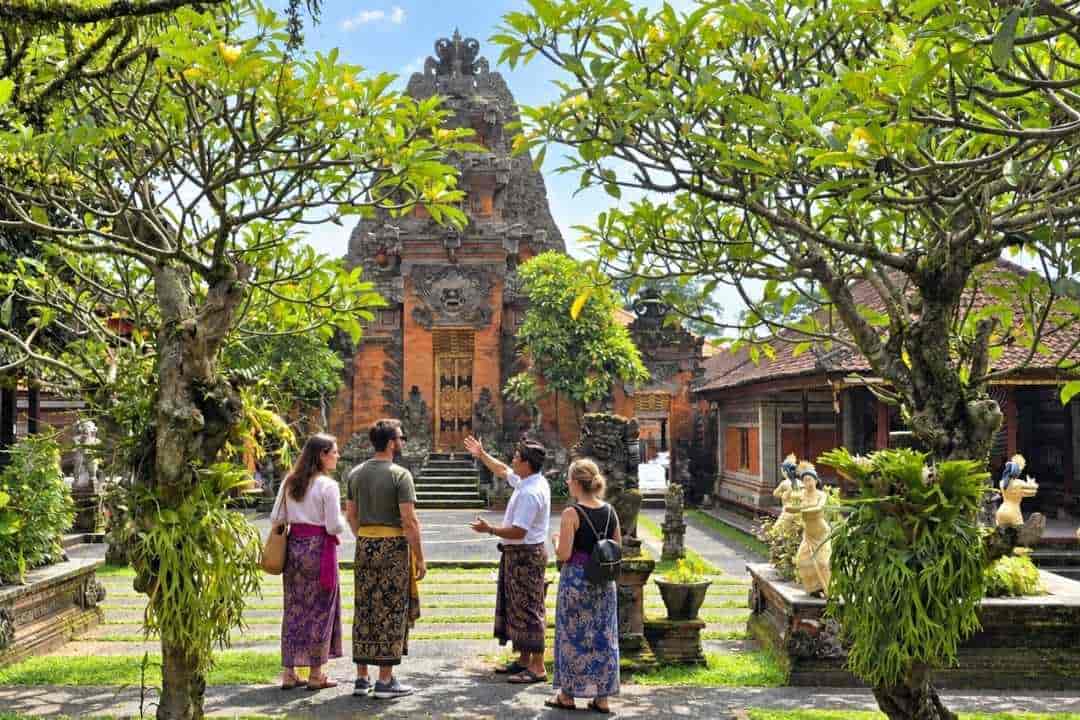
Unlike European castles, a traditional Balinese palace usually does not consist of one enormous building. Instead, the complex includes several courtyards and open pavilions. Ornate gateways connect different areas, while shrines, gardens, and ceremonial spaces complete the setting.
What Makes Balinese Royal Architecture Unique?
One of the most interesting features of Royal Palaces in Bali is their layout.
Different sections traditionally served different purposes. Some areas welcomed guests, while others supported ceremonies or family activities. Meanwhile, private sections remained reserved for members of the royal household.
As a result, exploring a puri offers more than beautiful architecture. It can also introduce travellers to how Balinese ideas about community, spirituality, hierarchy, and nature shape the design of important spaces.
1. Ubud Palace – One of the Most Famous Royal Palaces in Bali
Located in the heart of town, Ubud Palace or Puri Saren Agung, is probably the best-known royal palace in Bali.
The palace remains closely associated with Ubud’s royal family, while selected areas welcome visitors. Its traditional gateways, detailed carvings, and open pavilions make it an easy introduction to Balinese royal architecture.
However, architecture is only part of its appeal.
Traditional Balinese performances regularly take place at the palace, giving travellers another way to connect with Ubud’s artistic heritage. In addition, the palace sits opposite Ubud Art Market and close to many other attractions in central Ubud. Therefore, it fits easily into a cultural day around town.
Where Royal Heritage Meets Ubud’s Art Scene
Ubud has developed into one of Bali’s most famous creative destinations. Yet its artistic identity did not begin with modern galleries, cafés, and international tourism.
Royal patronage played an important role in supporting local artists and performers. As a result, the palace offers useful context for understanding why art and culture remain so strongly associated with Ubud today.
Rather than treating it as a quick photo stop, take time to observe the carvings, courtyards, and architectural details.
2. Puri Agung Peliatan – A Living Palace of Art and Dance
Among the Royal Palaces in Bali, Puri Agung Peliatan stands out for its strong connection with traditional music, dance, and local cultural life.
The palace feels more intimate than Ubud Palace. Traditional pavilions, decorated gateways, and peaceful courtyards create an atmosphere that encourages visitors to slow down and look more closely.
Peliatan also has a long association with Balinese music and dance. Therefore, its cultural importance extends beyond royal history.
Discover Another Side of Royal Ubud
Many travellers spend most of their time around central Ubud. However, exploring nearby Peliatan reveals another layer of the area’s cultural identity.
Traditional performances and cultural activities continue to connect the palace with the performing arts. Nevertheless, programmes can change throughout the year. Check the latest schedule before planning your visit.
For travellers interested in dance, architecture, and local history, Peliatan makes an excellent addition to an Ubud cultural journey.
3. Puri Agung Karangasem – A Unique Royal Palace in Bali
Travelling east brings a completely different royal experience.
Puri Agung Karangasem stands in Amlapura and reflects the history of the former Kingdom of Karangasem. Built in the late 19th century, the palace combines Balinese architecture with Chinese and European influences.
This mix immediately sets the complex apart from many other Royal Palaces in Bali.
Visitors can explore traditional courtyards and architectural details while discovering how outside influences became part of the palace’s design.
A Royal Palace With an Unexpected European Connection
One of the palace’s most interesting details is a building known as Maskerdam, a name associated with Amsterdam.
This unusual feature reflects the cross-cultural connections that influenced Karangasem during an important period in its history. However, the palace still maintains a strong Balinese identity through its layout, gateways, pavilions, and decorative details.
As a result, Puri Agung Karangasem offers much more than a beautiful setting. It provides a glimpse into a period when local royal traditions interacted with influences arriving from beyond Bali.
4. Klungkung Royal Heritage – Discover Kertha Gosa
Klungkung once held an important position among Bali’s royal kingdoms. Although much of its original royal palace no longer survives, visitors can still discover an important part of that history at Kertha Gosa in Semarapura.
The complex preserves the former royal court pavilion, along with Bale Kambang and other surviving elements of the old palace area. Most of the royal complex disappeared following the conflict with Dutch forces in 1908.
Today, Kertha Gosa provides a very different experience from Ubud or Karangasem.
Look Up and Discover the Story
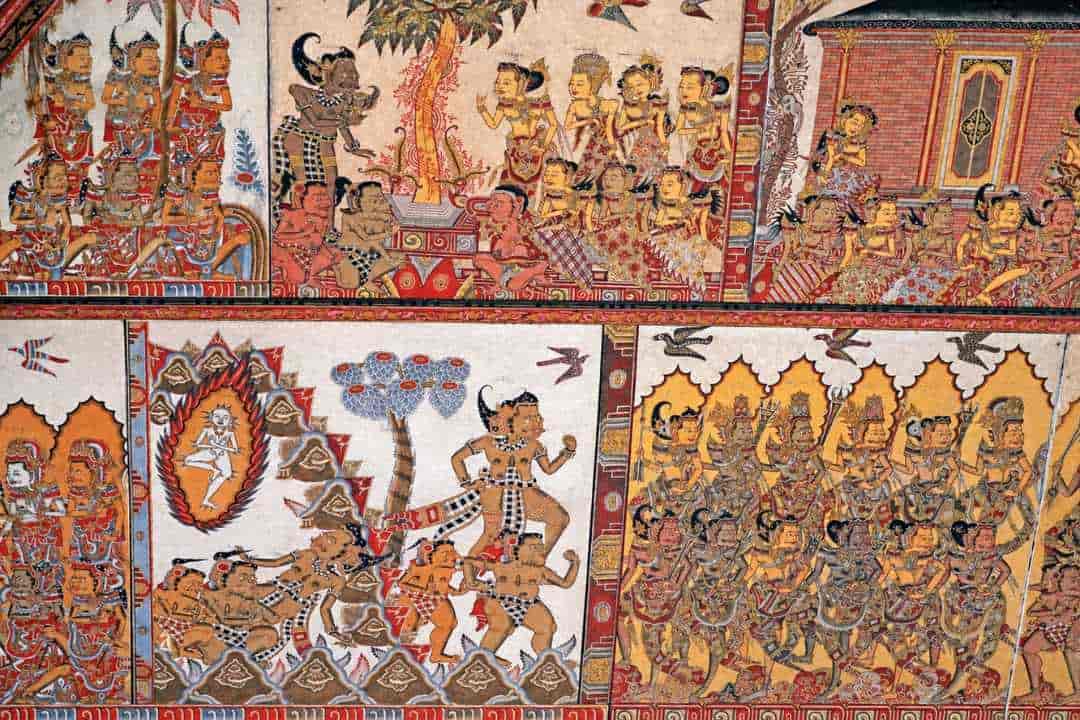
The ceiling is a highlight.
Traditional Kamasan-style paintings cover the pavilion and depict stories connected with morality, justice, and consequences. These paintings were especially meaningful because Kertha Gosa once functioned as a royal court of justice.
Therefore, the site reveals another side of royal life. Palaces were not simply luxurious residences. They also served as centres of administration, decision-making, culture, and community life.
For travellers interested in Balinese history, Kertha Gosa deserves much more than a quick stop.
5. Tirta Gangga – A Royal Garden Surrounded by Water
While exploring Royal Palaces in Bali, travellers should also look beyond traditional palace buildings. Tirta Gangga shows how the island’s royal heritage extended into gardens, water features, and peaceful retreats.
Tirta Gangga is better described as a royal water garden. The former King of Karangasem created the complex during the 1940s as a retreat for the royal family. Today, its pools, fountains, statues, gardens, and famous stepping stones make it one of East Bali’s most recognizable attractions.
Its name refers to the sacred Ganges River, while a natural spring supplies the gardens with water.
More Than a Beautiful Photo Spot
Many travellers know Tirta Gangga from photos of visitors walking across stepping stones surrounded by colourful koi. However, there is much more behind the scenery.
The gardens connect royal history with Bali’s deep relationship with water. The spring also holds cultural and religious significance for surrounding communities.
The 1963 eruption of Mount Agung badly damaged the complex. Later restoration brought the gardens back to life, creating the landscape visitors can explore today. Therefore, Tirta Gangga represents not only royal elegance but also preservation and renewal.
6. Taman Ujung – A Royal Retreat Near the Sea
Another impressive royal landmark waits closer to the coast.
Taman Ujung, also known as Taman Sukasada, served as Karangasem’s royal water palace. The King of Karangasem developed it in the early 20th century.
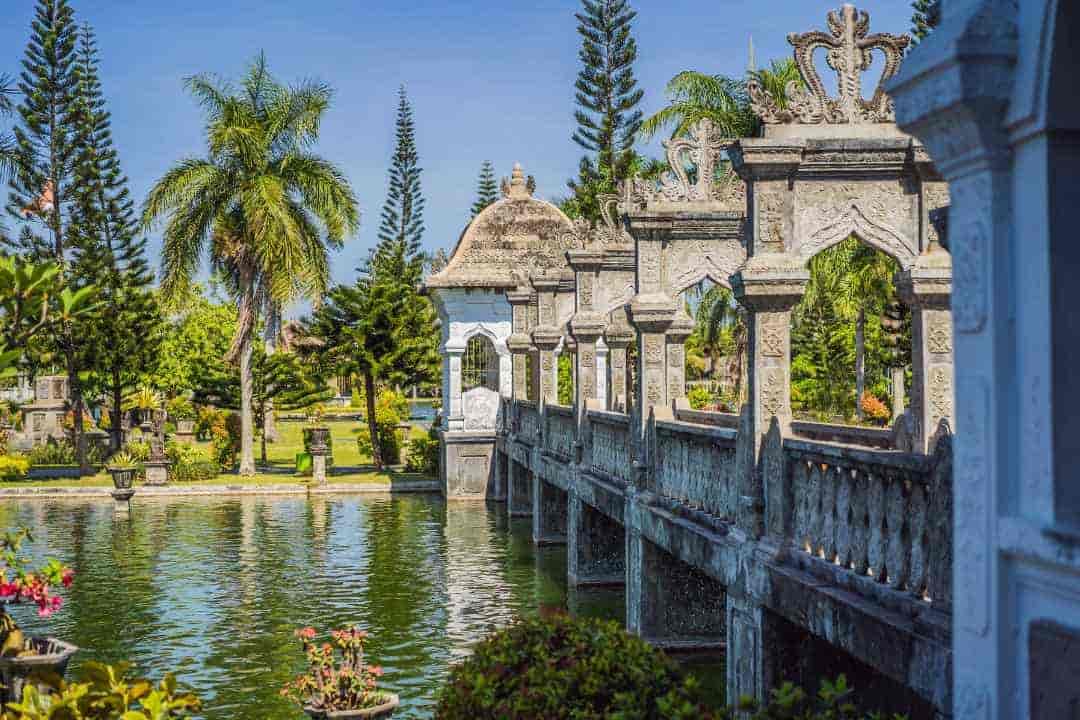
Large pools dominate the landscape, while long bridges connect elegant pavilions across the water. Meanwhile, elevated viewpoints reveal sweeping views over the gardens and surrounding landscape.
The architecture also blends Balinese, European, and Chinese influences. As a result, Taman Ujung feels quite different from the enclosed courtyards of a traditional puri.
Why East Bali Is Perfect for Exploring Royal Heritage
East Bali is one of the best regions for travellers who want to discover several Royal Palaces in Bali and related royal heritage sites within one journey.
Puri Agung Karangasem, Tirta Gangga, and Taman Ujung tell different parts of the same regional story. Yet each offers a completely different atmosphere.
Puri Agung Karangasem introduces royal architecture and history. Meanwhile, Tirta Gangga feels intimate and lush. Taman Ujung, in contrast, offers open gardens, large pools, bridges, and panoramic scenery.
Therefore, travellers interested in Bali’s royal heritage can discover much more by spending a full day exploring East Bali.
7. Puri Agung Satria – Discover Royal Heritage in Denpasar
Royal history is not limited to Ubud and East Bali.
In the centre of Denpasar, Puri Agung Satria provides another fascinating example of Bali’s royal heritage. The palace was once connected with the rulers of Badung and remains notable for its combination of Balinese and Dutch architectural elements.
Two Dutch-influenced structures add a particularly unusual character to the complex. Meanwhile, Balinese architectural traditions remain visible throughout the palace. However, Puri Agung Satria is more than an architectural landmark.
A Palace That Still Supports Local Culture
The palace continues to function as a centre for social, cultural, and spiritual activities. It also supports traditional dance education for younger generations.
This makes Puri Agung Satria a good example of why Bali’s royal heritage should not be viewed only through the past. Although the island’s former kingdoms no longer govern Bali, royal spaces can still support community traditions and cultural activities today.
Does Bali Still Have Royal Families Today?
Yes, but their role has changed considerably.
Although the Royal Palaces in Bali no longer serve as centres of political power, descendants of royal families remain connected to many puri across the island.
Their modern roles are generally cultural, social, ceremonial, and community-based rather than political.
Some families still live in parts of their ancestral palace compounds. Royal families may also support religious ceremonies, traditional arts, cultural preservation, and community activities.
Therefore, Royal Palaces in Bali are particularly interesting because many represent living heritage rather than abandoned historical monuments.
How to Visit Royal Palaces in Bali Respectfully
Royal palaces may welcome travellers, but visitors should remember that some areas remain private, residential, ceremonial, or spiritually important.
Dress modestly when visiting. Moreover, pay attention to signs and instructions before entering particular courtyards. Visitors should also avoid interrupting ceremonies or entering areas reserved for family members.
Photography may be welcome in public sections. However, always follow local instructions, especially during ceremonies or religious activities.
Most importantly, take your time.
These places become far more interesting when you look beyond the main gate and consider the history, architecture, traditions, and communities behind them.
Why Royal Palaces in Bali Deserve a Place on Your Itinerary
Royal Palaces in Bali offer something many travellers may not expect. Rather than simply showcasing beautiful architecture, they reveal centuries of history that continue to influence modern Balinese culture.
From the famous courtyard of Ubud Palace to the artistic heritage of Peliatan, each destination tells a different story. Meanwhile, Puri Agung Karangasem reveals fascinating cultural influences, while Kertha Gosa introduces another side of Bali’s royal history. Tirta Gangga and Taman Ujung then show how royal heritage extends beyond traditional palace walls.
Most importantly, these places remind visitors that Bali’s heritage remains alive. Royal families continue to maintain traditions, cultural performances bring palace courtyards to life, and historic spaces remain connected to their surrounding communities.
A visit to one of Bali’s royal palaces can also be an inspiring addition to a company outbound trip, combining team travel with a meaningful introduction to the island’s history, architecture, and living traditions.
If you are looking to discover a deeper side of Bali, these seven royal landmarks deserve a place on your next journey across the Island of the Gods.

Comment (0)