
Manene Toraja, traditionally written as Ma’nene, offers travelers a fascinating insight into how Torajan communities understand family, memory, and respect for their ancestors. In the highlands of South Sulawesi, some families continue this meaningful ritual by reopening ancestral resting places, carefully tending to the preserved remains of relatives, and dressing them in fresh clothing. At first, the practice may surprise visitors who have never encountered it. However, its meaning reaches far beyond its striking appearance. Manene represents remembrance, affection, family responsibility, and a connection between generations that death does not simply erase.
Toraja itself attracts travelers with its distinctive culture and dramatic highland scenery. Traditional Tongkonan houses stand among rice fields and mountain landscapes. Meanwhile, burial sites, villages, ceremonies, and local customs reveal a cultural identity closely connected with ancestry.
Therefore, travelers should approach Ma’nene with curiosity and sensitivity. Rather than seeing it as an unusual spectacle, visitors should understand why families continue the tradition and what it means to the people involved.
What Is the Manene Toraja Tradition?
The Manene Toraja tradition is an ancestral ritual that some Torajan communities continue to practice in South Sulawesi.
During Ma’nene, families reopen tombs or burial chambers where their ancestors rest. Then, they carefully bring out preserved remains, clean and tend to them, and replace older clothing or coverings with garments prepared by the family. After completing the ritual, families return their ancestors to their resting places.
However, the physical process explains only one part of Manene.
For participating families, the tradition provides an opportunity to remember loved ones and maintain their place within the wider family story. In this sense, caring for ancestors becomes an expression of continuing affection.
Moreover, different communities may follow their own customs when carrying out Ma’nene. Therefore, travelers should not assume that every ceremony follows the same process.
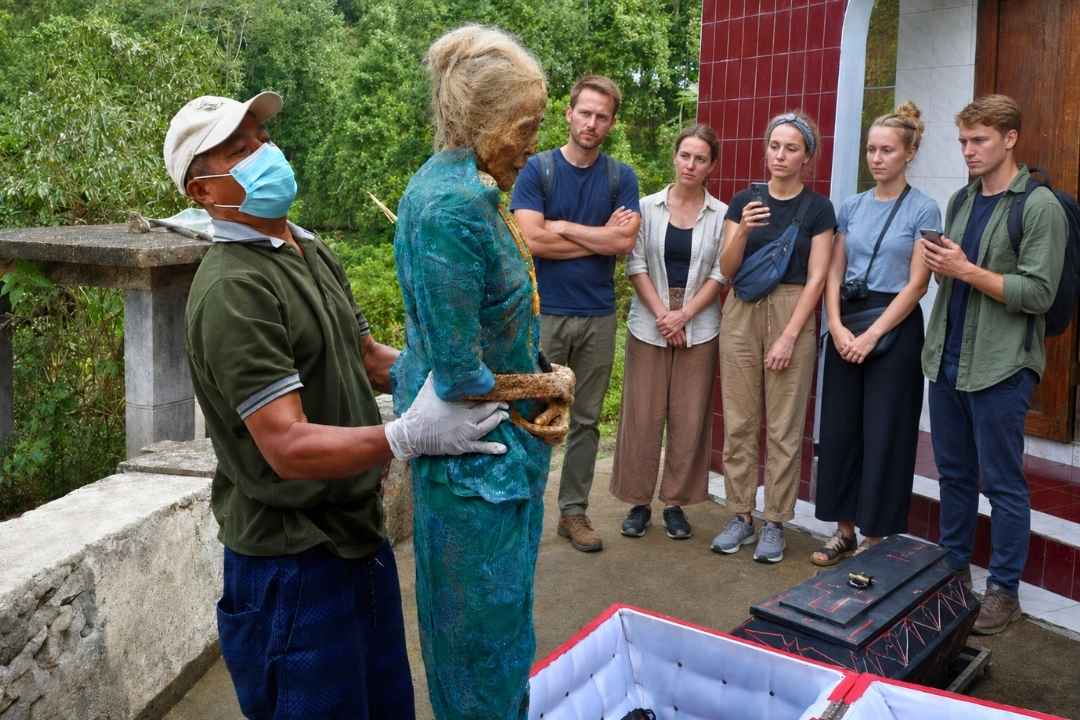
Manene Toraja Is Rooted in Ancestral Respect
To understand Manene Toraja, travelers should first learn about the cultural importance of ancestry in Toraja.
The ritual has roots in Aluk To Dolo, the ancestral belief system of the Toraja people. Traditionally, this worldview emphasizes relationships between people, ancestors, community, nature, and the spiritual world.
As a result, connections with ancestors appear throughout Torajan cultural life. Traditional houses, ceremonies, burial places, and family gatherings all help maintain intergenerational relationships.
Therefore, Ma’nene should not be viewed as an isolated or unusual custom. Instead, it reflects a wider understanding of family responsibility, memory, ancestry, and cultural continuity.
In Manene Toraja, Death Does Not End Family Bonds
One of the most meaningful aspects of Manene Toraja is the way it reflects continuing family relationships.
In many cultures, burial creates a clear physical separation between living relatives and those who have died. However, participating Torajan families may express remembrance in different ways. Ancestors continue to hold an important place within family history and identity.
The ritual can also bring living relatives together. Family members who live far from their ancestral villages may return and reconnect with relatives. Meanwhile, younger generations have an opportunity to learn about family members who came before them.
Consequently, Ma’nene concerns both the deceased and the living. It helps families preserve memories while strengthening relationships across generations.
Why Families Prepare New Clothes
Changing an ancestor’s clothing is one of the most recognizable parts of Ma’nene. Families prepare fresh garments or coverings before carefully tending to their relatives. For outside observers, this process often becomes the most visually striking element of the ceremony.
However, focusing solely on its appearance can obscure its deeper meaning. Preparing new clothing represents care and affection. Families treat their ancestors as loved ones who continue to hold an important place within family memory.
Therefore, visitors should avoid interpreting the clothing as something prepared for tourists or cameras. It forms part of a personal tradition of remembrance.
Tongkonan and the Meaning of Family in Toraja
Understanding Manene Toraja also becomes easier when travelers learn about the Tongkonan.
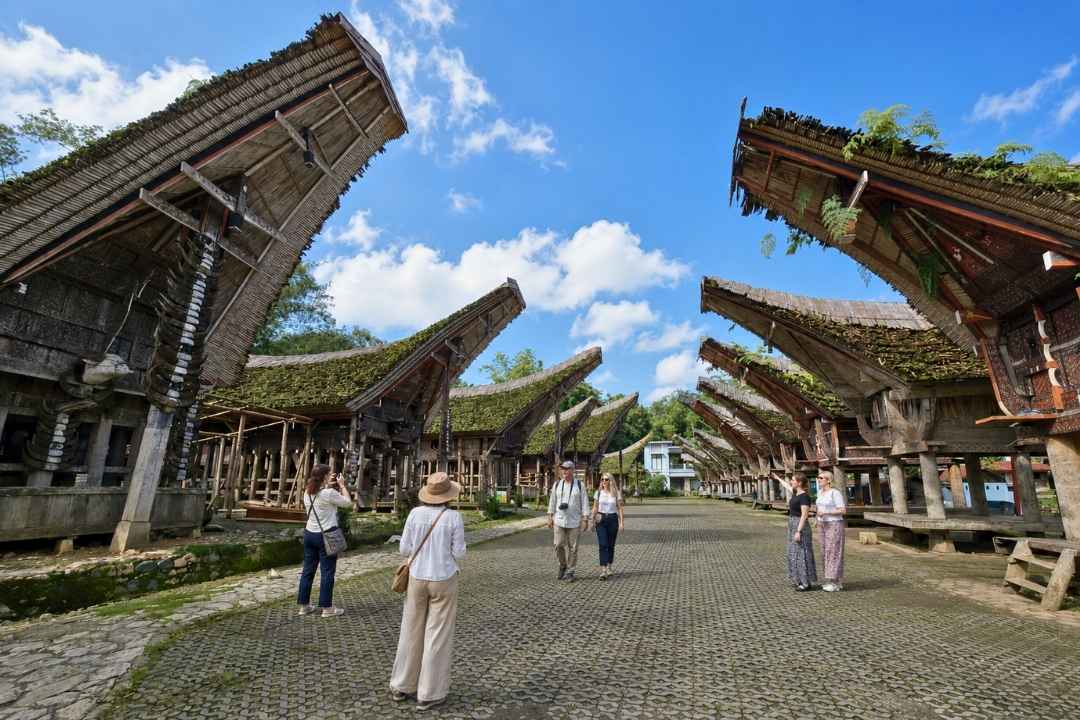
These traditional Torajan houses rank among South Sulawesi’s most recognizable cultural landmarks. Their dramatic curved roofs create a distinctive appearance across the highlands.
However, a Tongkonan represents much more than architecture. The traditional house serves as an important center of family, social, and cultural life. It connects generations while representing ancestry and family identity.
The word tongkon relates to sitting or gathering together. Therefore, the name itself reflects the house’s role as a place where relatives and community members connect. In addition, traditional carvings and architectural elements can carry cultural meanings.
This connection between home, family, and ancestry provides useful context for understanding Ma’nene. Torajan heritage is not only found in stories. It also lives through houses, ceremonies, landscapes, burial places, and relationships.
Do Torajans Really Walk With Their Ancestors?
Online stories about Ma’nene sometimes describe it as a tradition where people “walk with the dead.” However, this description can oversimplify the ritual.
Practices may vary between communities and families. In some contexts, relatives may move or carry ancestral remains during parts of the ceremony. Nevertheless, travelers should not assume every Ma’nene follows an identical process.
More importantly, making an ancestor appear to “walk” does not define the tradition’s purpose. The ceremony centers on family, remembrance, care, and respect.
Therefore, describing Manene Toraja simply as a ritual involving “walking corpses” removes much of the cultural context. Although such phrases may attract attention online, they do not explain why families continue the tradition.
For travelers, understanding that difference matters.
When Does Manene Toraja Take Place?
There is no single universal schedule for Manene Toraja.
Different Torajan communities follow their own customary traditions. Furthermore, timing can depend on local arrangements, family decisions, and ceremonial considerations.
Some communities may observe Ma’nene in cycles spanning several years. However, not every village follows the same pattern.
Therefore, travelers should avoid planning a journey based only on dates found in older articles, previous event calendars, or social media posts.
A date that applied to one village or previous ceremony may not apply elsewhere. This flexibility also reminds visitors that Ma’nene remains a living cultural tradition, rather than a tourism event with a permanent annual calendar.
Want to Witness Manene Toraja?
If experiencing Manene Toraja is one of the reasons you want to explore South Sulawesi, checking the latest local information before traveling is essential.
You can contact us before planning your Toraja journey, and our team can help check the latest available information about Ma’nene during your intended travel period.
However, because Ma’nene remains a family and community tradition, its availability cannot be guaranteed. Local customs and community decisions always come first.
If visitors have the opportunity to observe the ritual, they should follow the guidance of local communities and experienced guides. In this way, travelers can enjoy a meaningful cultural experience while respecting the people who continue the tradition.
Respecting Manene Toraja as a Traveler
As Toraja has gained international attention, Manene Toraja has naturally attracted travelers, photographers, journalists, and content creators.
Cultural tourism can introduce visitors to Torajan history and encourage appreciation for local heritage. However, increased attention also creates challenges. Photographs of preserved ancestors can quickly spread online without cultural explanation. Consequently, audiences may focus on shock rather than meaning.
Visitors should remember that Ma’nene exists because families continue their own cultural traditions. It does not exist simply to entertain tourists. Therefore, travelers should always follow local guidance. Ask permission before taking photographs and avoid intrusive close-ups unless the family clearly allows them.
Likewise, never touch ancestral remains or ceremonial objects without permission. Visitors should dress respectfully, speak quietly when appropriate, and avoid interrupting family activities for photographs.
Most importantly, remember the reason people have gathered. For a traveler, Ma’nene may represent a once-in-a-lifetime cultural encounter. For the participating community, however, the ceremony involves their parents, grandparents, relatives, and ancestors.
The same respect should continue online. Instead of using sensational descriptions about “mummies” or “walking corpses,” travelers can explain the values behind the tradition.
A thoughtful photograph with cultural context can help others understand Toraja rather than simply react to it.
Discover Toraja Beyond Manene
Although Manene Toraja attracts considerable attention, it represents only one part of Toraja’s extraordinary cultural landscape. Travelers should allow enough time to discover the region beyond a single ceremony.
Toraja combines traditional villages, Tongkonan architecture, rice terraces, mountain landscapes, burial cliffs, local markets, handicrafts, and long-established customs. Therefore, exploring several places provides a much richer understanding of the region.
Traditional Villages and Toraja’s Burial Heritage
Ke’te’ Kesu’ is one of the best-known traditional settlements in Toraja. Visitors can see rows of Tongkonan houses and traditional rice barns while learning about the relationship between architecture, family, and heritage.
Meanwhile, Londa offers another perspective on Torajan culture through the lens of its burial landscape. Visitors can encounter caves, traditional coffins, rock burial areas, and tau tau, wooden figures associated with the deceased.
These places help travelers understand how Torajan ideas about ancestry extend into architecture and the surrounding landscape.
However, visitors should remember that burial areas remain culturally important spaces. Travelers should behave with the same respect they would show at a cemetery or sacred site elsewhere in the world.
A knowledgeable local guide can also make the experience more meaningful. Instead of simply seeing unusual structures, travelers can learn about their cultural meaning and the traditions connected with them.
Why Manene Toraja Still Matters Today
Modern life continues to transform Toraja. People travel for education and work, while tourism connects local communities with visitors from around the world. In addition, smartphones and social media can share images of traditional ceremonies globally within seconds.
Nevertheless, Manene Toraja continues to connect participating families with their ancestors. That continuity gives the tradition much of its significance.
It demonstrates how cultural heritage can remain meaningful even as society changes. At the same time, growing international attention creates a responsibility to ensure the tradition does not become merely a spectacle.
Travelers, guides, photographers, tour operators, and media all play a role in maintaining that balance.
For first-time visitors, Ma’nene may challenge familiar ideas about death. Yet looking beyond its striking appearance reveals something deeply human. Families remember those who came before them, care for their ancestors, gather with relatives, and continue traditions passed through generations.
Therefore, Manene Toraja deserves more than a sensational photograph. It represents family identity, ancestral respect, collective memory, and the continuation of Torajan heritage.
If experiencing Ma’nene forms part of your travel interests, contact us to check the latest local information and plan a suitable Toraja journey. Since the ritual follows community traditions rather than a fixed tourism calendar, checking current conditions offers a more respectful way to plan.
Ultimately, meaningful travel is not only about seeing something different. It is also about understanding why another community values its traditions and learning how to experience them with respect.

Comment (0)