
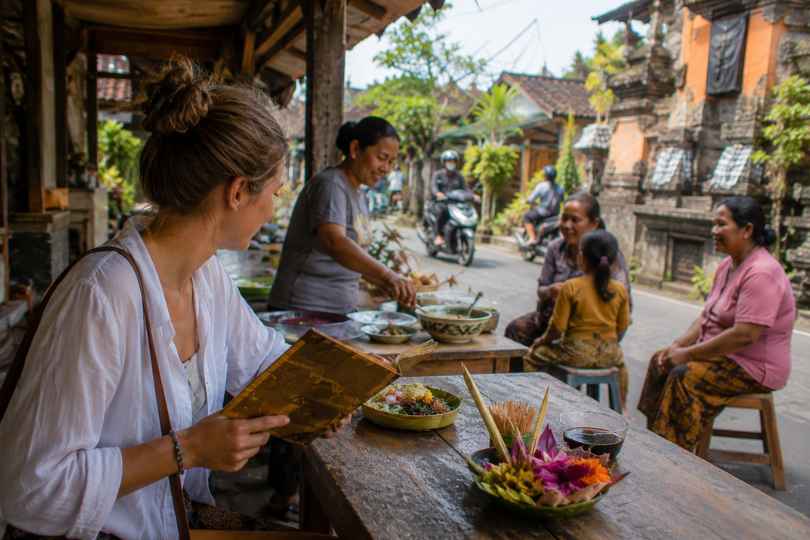
Bali Culture Shock can happen even before you reach your hotel. For first-time visitors, the island may look familiar through photos, travel videos, and social media. However, daily life in Bali can feel very different once you see it in person. You may notice statues beside roads, small offerings outside shops, people wearing traditional clothing, dogs resting near homes, and ceremonies taking place in places you may not expect. At first, these sights can feel surprising. Yet, they become much easier to understand once you learn the meaning behind them. In fact, these everyday details are part of what makes Balinese culture so distinctive. Therefore, understanding them before your trip can help you enjoy Bali with greater appreciation.
Understanding Bali Culture Shock Before Your First Visit
Every destination has its own rhythm. Bali is no exception. However, the island has a particularly strong cultural identity because religion, community, art, and daily life often overlap.
For many visitors, this creates small moments of Bali Culture Shock. A traveler might see a family preparing offerings outside their home. Elsewhere, a procession may move along a road. At another location, traditional clothing may appear in the middle of an ordinary day.
These experiences may look unusual at first. However, they usually have a cultural or religious meaning.
Moreover, many of these practices are not performances created for tourists. They remain part of everyday life for local communities. Therefore, visitors can gain a better travel experience when they understand what they are seeing.
So, what should first-time travelers expect?
Here are five culture shocks that may catch you by surprise during your first Bali trip.
1. Bali Culture Shock: Statues and Temples Everywhere
One of the first things visitors may notice is the sheer number of statues and temples.
You do not need to visit a famous attraction to see them. Statues can appear beside roads, at entrances, outside businesses, near intersections, and around residential areas. Meanwhile, temples can be found in villages, family compounds, rice fields, and other parts of daily life.
For someone visiting Bali for the first time, this can feel quite unexpected.
Instead of seeing religious architecture only at major tourist attractions, travellers can encounter it simply by driving around the island.
Why Are Statues So Common in Bali?
Art has a strong place in Balinese culture. Local craftsmanship includes stone carving, wood carving, sculpture, painting, and other traditional arts.
Some statues serve an artistic purpose. Others have religious or symbolic meaning. Therefore, visitors should not automatically treat every statue as a tourist decoration.
Several large sculptures have also become famous landmarks. Examples include Garuda Wisnu Kencana, Dewa Ruci, Catur Muka, and Titi Banda.
At the same time, smaller statues can appear near homes and temples.
This combination of art and spirituality gives Bali a distinctive visual character. As a result, even a simple road trip can feel like a cultural sightseeing experience.
Bali’s Temples Are Part of Everyday Life
The same applies to temples.
Bali is often associated with the phrase “Island of the Gods.” Visitors quickly understand why once they see how many sacred spaces exist across the island.
Family temples, village temples, and larger temples all have different roles. Some connect closely with family ancestry, while others serve wider communities.
Consequently, tourists should remember that a temple is not automatically a sightseeing attraction simply because it looks beautiful. If you visit one, check the local rules first. Dress appropriately, follow signs, and respect people who are praying.
2. Bali Culture Shock on the Streets: Public Prayers and Ceremonies
Another surprising moment can happen while you are simply traveling.
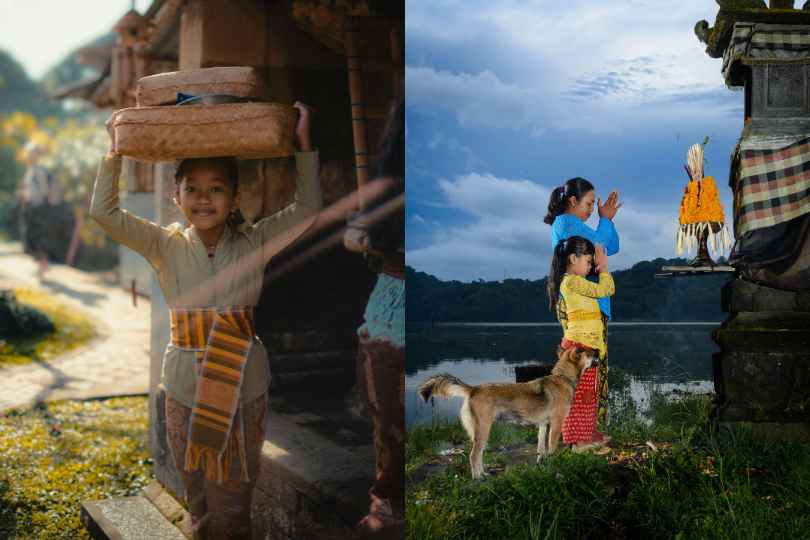
You might see people in traditional clothing stopping at a particular location. Sometimes, you may encounter a group carrying offerings or participating in a ceremony. In other situations, a religious activity may take place near a road or another public area.
For visitors unfamiliar with Bali, this can be confusing. After all, many travelers expect religious activities to happen only inside temples.
However, Balinese Hindu life does not neatly separate spirituality from everyday activities.
Understanding Public Religious Activities in Bali
One concept that helps explain this is Tri Hita Karana. The principle describes harmony among humans, harmony between people, and harmony with nature. Therefore, ceremonies and religious activities can form part of community life.
A visitor may also encounter a procession while traveling between destinations. At times, traffic may slow down because people are participating in a ceremony. Instead of becoming frustrated, it helps to remember that the road is also part of the local community.
What Should Travelers Do?
The best response is simple: observe respectfully.
If you encounter a ceremony, avoid walking directly through it unless locals clearly invite you. Also, do not block the procession just to take a photograph. Furthermore, ask before taking close-up photos of people during religious activities.
A little patience can make a big difference. Rather than seeing an unexpected delay as an inconvenience, consider it an opportunity to observe a part of Bali that many visitors never experience beyond a tourist attraction.
3. An Unexpected Bali Culture Shock: Dogs Around Local Homes
For some travelers, this may be one of the most unexpected things about arriving in Bali.
Dogs are a familiar sight in many residential areas. You may see them resting outside homes, moving around local streets, or staying near family compounds.
For visitors from countries where dogs rarely roam freely, this can feel unusual at first. However, dogs have long had a place in Balinese households and communities.
Meet the Kintamani-Bali Dog
Bali also has its own distinctive dog breed, known as the Kintamani-Bali Dog.
The Federation Cynologique Internationale lists the Kintamani-Bali Dog as originating from Indonesia, with its origins in the Sukawana area of Kintamani, Bali. The organization granted the breed provisional recognition in 2019.
The breed has a thick coat and a distinctive appearance. It has also gained recognition beyond Bali. The Kintamani dog has traditionally been valued for qualities such as loyalty and alertness. For some families, dogs can also help guard the home.
Should Tourists Approach Local Dogs?
Not necessarily.
Some dogs may be friendly. Others may be nervous around strangers. Therefore, tourists should avoid suddenly touching or approaching an unfamiliar dog.
If a dog belongs to a local family, ask permission before interacting with it. This small habit can make your trip safer while also showing respect for local households.
4. Another Bali Culture Shock: Offerings in Unexpected Places
This may be one of the most memorable visual experiences for first-time visitors. You may notice small woven trays filled with flowers, rice, leaves, or other items placed outside houses, shops, restaurants, hotels, and other locations.
These offerings are commonly known as canang sari. At first, travelers may think they are simply decorative. However, they have a much deeper meaning within Balinese Hindu practice.
Why Are Offerings Everywhere?
Canang sari forms part of everyday religious life in Bali. Therefore, seeing offerings outside a shop or hotel should not feel strange once you understand their role.
The location can also vary. You may see them at entrances, on small shrines, near family compounds, or in other spaces. Because they are part of daily practice, tourists should treat them respectfully.
A Simple Bali Travel Tip: Watch Your Step
This is particularly important for first-time visitors. An offering may sit on the ground near a doorway or sidewalk. Therefore, look down before walking through unfamiliar areas.
If you accidentally disturb one, do not panic. Simply move away respectfully and avoid touching it unnecessarily. Most importantly, do not pick up offerings as souvenirs.
Once you understand their significance, these small baskets become more than something interesting to photograph. They provide a glimpse into how spirituality remains connected to everyday Balinese life.
5. Bali Culture Shock in Daily Life: Traditional Clothing
Another culture shock comes from seeing Balinese traditional clothing outside cultural shows.
Visitors often associate traditional Balinese clothing with dance performances, temple ceremonies, or staged cultural events. However, local people may wear traditional attire for religious activities, ceremonies, temple visits, and other important occasions.
Therefore, you may suddenly see people wearing traditional clothing while driving, walking through a village, visiting a temple, or carrying out other activities.
Traditional Clothing Is Part of Balinese Culture
For visitors, this can be surprising because the clothing may look elaborate. Men may wear an udeng, traditional cloth around the waist, and other ceremonial garments. Women may wear a kebaya with a traditional wrap.
The exact clothing can vary according to the occasion, ceremony, community, and personal circumstances. As a result, you may see different styles during your trip.
This is another reminder that Balinese Culture is not limited to performances designed for tourists. Instead, traditional clothing remains connected to religious and social life.
You May See It More Often During Special Days
Certain religious celebrations and ceremonies can make traditional clothing especially visible.
On these occasions, roads and neighbourhoods can look completely different from an ordinary day. Families may travel together, temples may become busier, and people may prepare for ceremonies.
For tourists, the scene can look almost like a festival. However, it is important to remember that people may be attending a meaningful religious event rather than participating in a tourist attraction.
Therefore, watch from an appropriate distance and avoid disrupting the activity.
How to Handle Bali Culture Shock
Bali Culture Shock does not have to be negative. In fact, those moments of surprise can become some of the most memorable parts of a trip. The key is to remain curious.
Instead of asking, “Why is Bali like this?”, try asking, “What does this mean to the local community?” That small change in attitude can completely transform your experience.
Observe Before You Act
When you encounter something unfamiliar, take a moment to observe. If people are praying, give them space. If you see an offering, avoid stepping on it. When you see a ceremony, watch quietly rather than walking through it. These simple actions show respect.
Ask Questions Respectfully
Local guides can also help explain things that visitors may not understand. For example, a guide can tell you why a ceremony is taking place, explain the meaning of an offering, or introduce you to different aspects of Balinese architecture.
This can make your Bali Travel Tips more practical because you learn from real situations rather than only reading about them online.
Remember That Bali Is More Than a Tourist Destination
Bali welcomes visitors from around the world, but it remains home to local communities with their own traditions and values. That balance matters.
You can enjoy the beaches, restaurants, resorts, attractions, and nightlife. At the same time, you should recognize that these experiences exist alongside temples, ceremonies, family traditions, community activities, and religious practices.
That is what makes the island so interesting.
Turn Bali Culture Shock Into a Cultural Experience
Your first visit to Bali may bring plenty of surprises.
You may wonder why statues appear beside ordinary roads. You may see people praying in places you did not expect. Dogs may become a familiar part of your surroundings. Small offerings may appear at your feet. Meanwhile, traditional clothing can suddenly turn an ordinary street into a cultural scene.
At first, these things may feel unfamiliar. However, that is exactly what makes travel meaningful.
Once you understand the reasons behind these traditions, the surprises become easier to appreciate. Instead of seeing them as strange, you begin to recognize them as parts of everyday life.
Ultimately, the best way to handle Bali Culture Shock is to stay open-minded, observe respectfully, and remain curious. Bali is not simply a destination to visit. It is a place to experience.
And sometimes, the most memorable moments are not the ones you planned. They are the unexpected cultural encounters that make you stop, look around, and realize that you are somewhere truly different.


Comment (0)