
Sade Village Fire has brought attention to one of Lombok’s most important traditional Sasak settlements after flames swept through the historic community on Saturday night, August 22, 2026. The fire damaged dozens of traditional houses, handicraft shops, communal structures, and valuable cultural objects. However, Sade’s story is not only about what was lost. Recovery efforts are already focusing on traditional architecture, cultural artifacts, weaving livelihoods, and local knowledge. For travelers, the incident is also a reminder that Sade is much more than a tourist attraction. It is a living village where generations of Sasak culture continue to shape everyday life.
Located in Central Lombok, Sade has long introduced visitors to the traditions of the Sasak people. Travelers come to see distinctive houses, observe traditional weaving, explore the village, and learn about local customs.
Therefore, restoring Sade carries significance beyond rebuilding damaged structures.
The process also involves protecting a cultural identity that has developed across generations.
What Happened in the Sade Village Fire?
The fire broke out at around 10:05 p.m. WITA on August 22, 2026, in Sade Traditional Village, Rembitan Village, Pujut District, Central Lombok, West Nusa Tenggara.
According to information released during the recovery response, the damage affected 167 structures. These included 75 traditional houses, 69 handicraft shops, eight traditional barns, six Berugak Sekepat, four larger Berugak Sekenam, Bale Beleq, the Traditional Mosque, the village gate, and other community structures.
The impact also reached Sade’s cultural collections. The fire also damaged or destroyed traditional keris, spears, Gendang Beleq drums, ritual gongs, Peresean equipment, textiles, and ancient manuscripts.
Therefore, the incident was much more than a residential fire. It affected buildings where people lived and worked, as well as objects connected to Sasak history, ceremonies, craftsmanship, and cultural knowledge.
The fire affected around 320 residents from 120 families, while local authorities initially estimated material losses at approximately IDR 34–35 billion.
Emergency assistance followed as authorities began planning a longer cultural recovery.
What Caused the Sade Village Fire?
Early information suggested an electrical problem. However, it is important not to present this as the confirmed cause.
Central Lombok Police began an investigation with assistance from the Bali Regional Police Forensic Laboratory. Investigators examined the scene, collected evidence, and gathered statements from witnesses to determine the cause of the fire.
Therefore, until authorities announce a conclusion, the most accurate wording is that the cause remained under investigation.
What is clear, however, is that fires can spread quickly through settlements where buildings stand close together and are built from highly combustible natural materials.
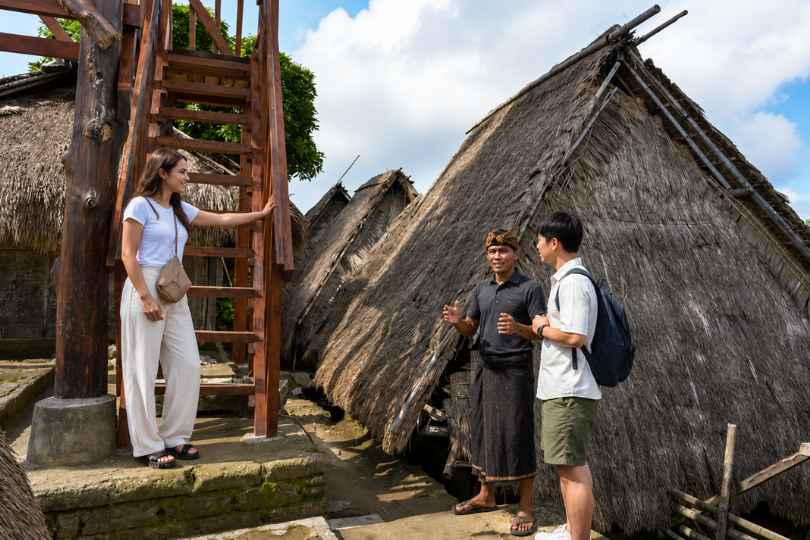
Sade’s traditional architecture relies heavily on materials such as bamboo, wood, and thatch. These materials form an essential part of the village’s architectural identity.
Consequently, the disaster has created an important challenge: how can Sade preserve its authentic architecture while improving protection against future fires?
What Is Sade Traditional Village in Lombok?
Understanding the importance of the Sade Village Fire requires knowing why this small community matters.
Sade Traditional Village is located in Rembitan, Central Lombok. It is one of the island’s best-known places for travellers seeking to learn about Sasak culture.
The settlement has welcomed visitors for decades while maintaining its role as a living community. That distinction matters.
Sade is not simply a cultural attraction constructed for tourists. Families live in the village and continue traditions related to architecture, weaving, community life, and local customs.
For travelers exploring Lombok, visiting Sade has offered an opportunity to experience a cultural side of the island that differs from its famous beaches, surf breaks, mountains, and islands.
A Living Home of Sasak Culture
The Sasak are the largest ethnic group on Lombok. Their cultural identity includes distinctive traditions, language, music, architecture, crafts, ceremonies, and social customs.
At Sade, several elements of this heritage coexist within a single community. Traditional houses immediately stand out.
The buildings use natural materials and architectural techniques that have developed in response to local conditions and lifestyles. Bamboo, timber, and thatched roofs contribute to the settlement’s recognisable appearance.
Meanwhile, communal structures such as berugak provide spaces connected with social and community activities.
Traditional barns also contribute to the village’s visual identity. However, Sasak culture cannot be understood through architecture alone.
Music, oral traditions, textiles, ceremonial objects, martial traditions, and everyday knowledge are equally important. That is why the loss of cultural objects during the fire raised concerns that extend far beyond their monetary value.
Traditional Weaving Is Part of Sade’s Identity
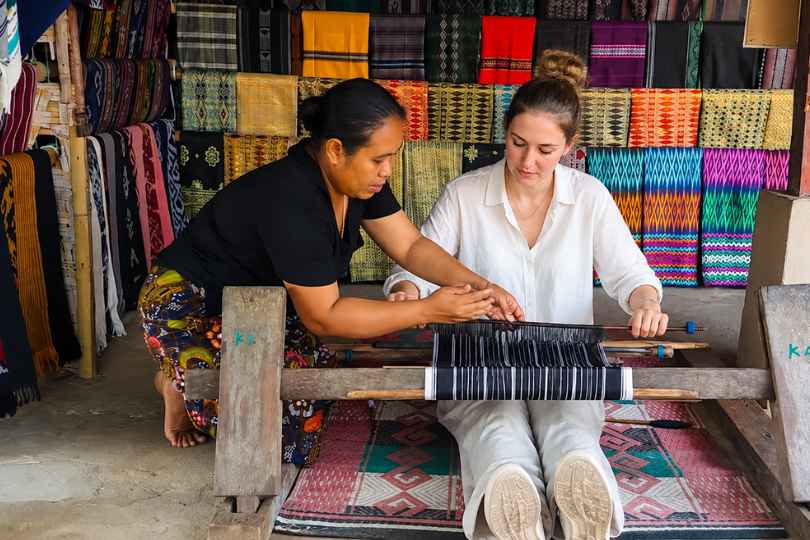
One of the experiences many travelers associate with Sade is traditional weaving. Local women have maintained textile-making skills through generations, creating fabrics with distinctive colors, motifs, and techniques.
Visitors can often observe the weaving process and purchase locally made textiles directly from residents. However, these fabrics represent more than souvenirs.
Weaving involves skills and knowledge that artisans learn and continue over time. In addition, textile sales contribute to household income. The Sade Village Fire damaged dozens of handicraft shops and equipment that local artisans rely on for their work.
Therefore, restoring weaving livelihoods has become an important part of the wider recovery effort.
Why Travelers Visit Sade Traditional Village
Lombok is often associated with beaches, surfing, Mount Rinjani, and the Gili Islands. However, Sade offers visitors another reason to explore the destination.
Before the fire, travelers could walk along the village’s narrow pathways, observe traditional houses, meet local artisans, watch weaving demonstrations, and learn about Sasak customs.
Its location also makes Sade convenient for travelers exploring Central and South Lombok.
The village is within reach of Kuta Lombok and the Mandalika tourism area. Therefore, cultural sightseeing can easily complement a beach or nature-focused itinerary.
More importantly, Sade gives visitors context. Beautiful beaches show one side of Lombok. Traditional villages help visitors understand the people and culture that give the island its identity.
For that reason, Sade’s eventual recovery will matter to Lombok tourism as well as to the community itself.
Why the Sade Village Fire Is a Major Cultural Loss
Counting damaged houses alone cannot explain the full impact of the fire. Buildings can eventually be reconstructed. However, some cultural objects and knowledge are much harder to replace.
The fire affected traditional musical instruments, ceremonial equipment, manuscripts, weapons, textiles, and other items associated with Sasak heritage.
Ancient manuscripts are particularly important because they can preserve historical, religious, literary, or cultural knowledge.
Likewise, traditional objects may carry stories connected with families and ceremonies. This explains why the recovery involves cultural specialists as well as construction teams.
The objective is not simply to make Sade visually attractive again. Instead, authorities and residents need to preserve as much cultural continuity as possible.
Sade Village Fire Recovery and Restoration Begins
The Indonesian Ministry of Culture has prepared a multi-stage recovery approach for Sade. The first phase focuses on emergency rescue and documentation.
Teams have searched through damaged areas for surviving cultural objects, including textiles, manuscript fragments, heirlooms, and other materials that may still be preserved.
At the same time, cultural documentation has become important. Officials have worked to record local stories, traditional knowledge, historical information, and community memories.
This approach recognizes that heritage does not exist only inside museums or buildings.
It also lives through people.
Saving Sade’s Surviving Cultural Heritage
Following the Sade Village Fire, teams began identifying and documenting objects recovered from the damaged settlement.
The NTB Culture Office worked with residents to inventory surviving cultural materials. Meanwhile, cultural specialists also collected information about local traditions and knowledge. The West Nusa Tenggara Museum later joined the salvage effort.
By August 26, teams had recovered several damaged objects, including traditional fabrics, weaving equipment, household items, and grain samples. The team identified four damaged textiles carrying Sasak motifs for further documentation and conservation.
Individual objects may appear small compared with an entire house. However, they can provide important information about traditional craftsmanship and everyday community life.
Therefore, rescuing them before debris removal progresses is an important step.
Rebuilding With Traditional Materials
Physical reconstruction presents another challenge. Authorities have stated that rebuilding Sade cannot follow the same process as that used to construct an ordinary modern residential area.
Instead, the restoration should maintain the original form and character of the traditional village.
Current plans call for traditional materials such as wood, bamboo, palm fiber, and thatch to remain part of the reconstruction. At the same time, modern fire-prevention systems are expected to form part of the restored settlement.
Balancing those goals will be essential. Replacing the damaged buildings with modern concrete replicas could undermine the village’s authenticity.
However, rebuilding without improving fire protection could leave residents and cultural assets vulnerable.
Therefore, restoration needs to respect both cultural authenticity and community safety.
Protecting Ancient Manuscripts for the Future
Some cultural losses cannot simply be reconstructed from physical remains. Ancient manuscripts are one example. According to the government’s recovery plan, lost cultural manuscripts may be reconstructed using copies or comparable ancient texts preserved by the West Nusa Tenggara Museum.
Furthermore, authorities plan to strengthen the digitization of cultural documents.
Digital records cannot replace original manuscripts. Nevertheless, they can help preserve information if physical material becomes damaged or lost in the future.
The recovery process is also expected to improve the inventory and registration of Sade’s cultural assets.
As a result, the fire may ultimately encourage stronger documentation of the village’s heritage.
Supporting Sade’s Weavers and Local Community
Cultural restoration is only one part of the recovery. Residents also need to rebuild their everyday lives.
Many families depend on traditional handicrafts and tourism-related activities for income. With dozens of handicraft shops affected, the fire created an immediate economic challenge.
Weaving is especially significant. To help artisans restart their livelihoods, authorities plan to provide replacement looms and weaving equipment to affected residents.
This assistance has two purposes. First, it helps families begin earning income again. Second, it supports the continuation of traditional weaving knowledge.
The two are closely connected. A cultural tradition is more likely to survive when people can continue practicing it as part of everyday life. Therefore, helping artisans return to work is also a form of cultural preservation.
 What the Sade Village Fire Means for Travelers
Travelers planning a Lombok holiday should understand that the fire affected Sade Traditional Village, not Lombok as a whole.
Other tourism areas around the island should be considered based on their current local conditions. However, visitors hoping to include Sade in their itinerary should check the latest situation before traveling.
Cleanup, cultural assessment, reconstruction, and community recovery may affect which areas visitors can access.
Furthermore, travelers should approach the affected community respectfully. Sade is a living village where residents have lost their homes, possessions, workspaces, and cultural objects.
Therefore, damaged areas should never be treated simply as dramatic photography locations. If local authorities allow visits during the recovery period, travelers should follow local guidance, stay outside restricted areas, and respect residents’ privacy.
Supporting authorized local artisans can also provide a more meaningful way to contribute to the community’s recovery.
Exploring Sasak Culture Beyond Sade
The Sade Village Fire does not mean travelers need to remove cultural experiences from a Lombok itinerary. Sasak culture extends across the island. Travellers can continue to discover local traditions in villages, traditional textiles, food, music, architecture, and community experiences elsewhere in Lombok.
This can also encourage visitors to spend more time exploring the destination rather than treating Sade as their only cultural stop.
Combine Culture With South Lombok’s Natural Beauty
Central and South Lombok offer an easy combination of culture and nature. Kuta Lombok and Mandalika can serve as convenient bases for exploring the southern region.
Travelers can also visit beaches such as Tanjung Aan and explore coastal viewpoints around the area. As a result, a Lombok itinerary can combine beaches, landscapes, local cuisine, traditional crafts, and cultural experiences.
Once Sade’s recovery allows visitors to return more normally, the village can again become an important part of this wider journey.
Discover Traditional Sasak Weaving
Travelers interested in culture can also learn more about Lombok’s weaving traditions. Different Sasak communities maintain textile-making practices, and visiting local artisans can reveal how fabrics are created by hand.
Colors, patterns, and techniques may differ between communities. More importantly, purchasing authentic products directly from local artisans helps keep traditional skills economically relevant.
Following the fire, this type of responsible spending can be particularly meaningful for Sade’s weaving community as authorised craft activities resume.
Sade Village Fire Recovery Could Build a More Resilient Village
Although the damage was extensive, recovery efforts began quickly.
West Nusa Tenggara authorities formed a dedicated task force to coordinate rehabilitation and restoration. Emergency assistance also supported residents with immediate needs following the disaster.
However, rebuilding the same structures is not the only goal. Authorities are also looking at how Sade can become better prepared for future emergencies. Plans include stronger community-based disaster preparedness and improved fire-prevention facilities.
This is particularly important because traditional villages face a unique challenge. Modern safety infrastructure needs to work alongside historic architecture rather than overwhelm it.
If implemented carefully, the recovery could help Sade preserve its distinctive appearance while becoming safer for residents and visitors.
The Future of Sade Traditional Village
The Sade Village Fire in August 2026 poses a major challenge to one of Lombok’s best-known Sasak communities.
The fire damaged traditional houses and handicraft shops while destroying cultural structures and valuable objects. Meanwhile, hundreds of residents experienced disruption to their homes and livelihoods.
Yet the recovery effort demonstrates that Sade is more than its physical buildings.
Museum teams are preserving surviving artifacts. Cultural authorities are documenting local knowledge. Reconstruction plans aim to maintain traditional architecture. Weavers are expected to receive equipment to help them restart their livelihoods, while digitisation can help safeguard cultural records for future generations.
For travelers, Sade’s recovery deserves patience. The priority should remain the needs of residents and the preservation of their heritage.
Eventually, visitors will once again have opportunities to experience the village and learn about Sasak culture. When that happens, Sade’s story may carry an additional layer of meaning.
Its traditional houses, weaving, cultural objects, and community spaces will not simply represent the past. They will also tell a story of recovery. Therefore, when Sade is ready to welcome travelers more fully again, visiting responsibly can help travelers understand something deeper about Lombok.
Beyond beaches and beautiful scenery lies a living culture shaped by communities determined to preserve their identity for generations to come.




Comment (0)