
East Java Tourist Attractions
Harness the Magic: Explore East Java’s Enchanting Tourist Attractions!
East Java tourist attractions offer a treasure trove of natural wonders, cultural heritage, and unforgettable experiences to discover. As you travel through this unique region, you will find stunning landscapes and colourful culture. These are what characterise East Java tourist sites. From the breathtaking heights of Mount Bromo to the tranquil beaches of Banyuwangi, every tourist can find something to discover.
One of East Java’s most iconic attractions is Mount Bromo. This active volcano is surrounded by a vast sea of sand. Witnessing the sunrise over the crater is a once-in-a-lifetime experience that will leave you in awe of nature’s beauty. For those seeking adventure, hiking to the summit of Mount Bromo offers panoramic views that are sure to take your breath away.
Beyond its natural wonders, East Java is home to a rich cultural heritage. Explore the ancient temples of Trowulan, the former capital of the Majapahit Empire, and discover the history and architecture of this fascinating civilisation. Immerse yourself in East Java’s traditional dance and music, or sample delicious cuisine that reflects the region’s diverse influences.
What to see in East Java extends beyond its landscapes and cultural attractions. Wildlife enthusiasts will delight in spotting rare species in the lush jungles of Meru Betiri National Park. Meanwhile, beach lovers can relax on the pristine shores of Red Island. Whether you’re seeking adventure, culture, or relaxation, East Java tourist attractions have something for everyone. So pack your bags and get ready for an unforgettable journey.
Discover Best East Java Tourist Attractions
Top Tourist Attractions in East Java by Region
East Java features incredible diversity across its volcanic mountains, highland valleys, and coastal national parks:
Bromo Tengger Semeru National Park
Mount Bromo is one of Southeast Asia’s most famous active volcanoes.
- Penanjakan Sunrise Viewpoint: Watch a breathtaking golden sunrise over the misty Bromo caldera and the smoking peak of Mount Semeru.
- Sea of Sand (Pasir Berbisik): A vast volcanic sand desert surrounding Mount Bromo. Visitors cross the black sand on foot or by 4×4 jeep.
- Mount Bromo Crater: Climb the concrete stone staircase directly to the rim of Mount Bromo’s active, steaming crater.
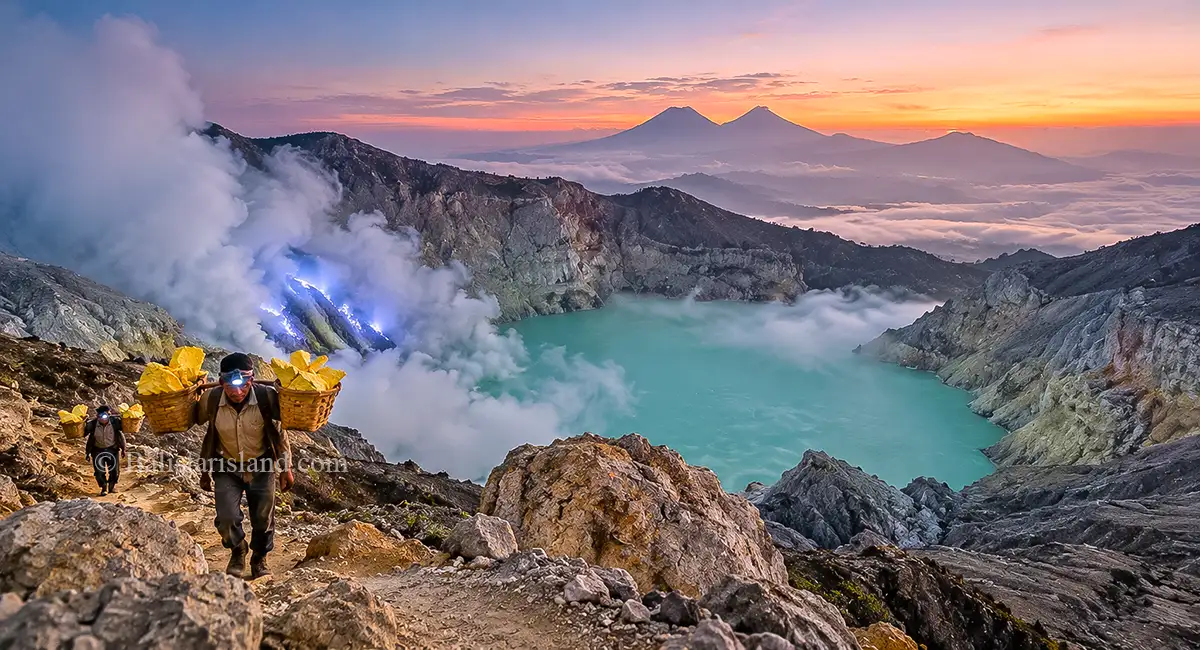
Ijen Crater (Kawah Ijen & Banyuwangi)
Located at Java’s eastern tip, Ijen is world-famous for its unique volcanic phenomena.
- Electric Blue Fire Phenomenon: A rare natural sight caused by ignited sulfuric gas, visible during early morning darkness before dawn.
- Acidic Crater Lake: The world’s largest highly acidic crater lake, featuring striking turquoise water surrounded by sulfur miners.
Lumajang Waterfall Region
Lumajang features some of Indonesia’s grandest and most spectacular jungle waterfalls.
- Tumpak Sewu Waterfall: Known as the “Niagara of Indonesia.” It features a majestic semi-circular curtain of water falling into a lush green canyon.
- Kapapas Biru & Goa Tetes: Hidden waterfall cascades and cave formations located near the base of Mount Semeru.
Malang & Batu Highlands
Cool mountain towns known for fresh air, apple orchards, colonial charm, and theme parks.
- Batu Flower Garden & Coban Rondo: Beautiful highland parks featuring pine forests, floral displays, and impressive waterfalls.
- Museum Angkut: A world-class transportation museum showcasing classic cars and historic vehicles from around the world.
Baluran National Park (Africa van Java)
A coastal national park located in Situbondo near Banyuwangi.
- Bekol Savanna: A vast open grassland where wild deer, water buffaloes, and exotic birds roam freely against the backdrop of Mount Baluran.
Essential Visitor Information & Adventure Tips
Proper preparation is important when exploring East Java’s volcanic terrain:
- Warm Clothing Required: Temperatures at Bromo and Ijen drop below 5°C before sunrise. Bring heavy jackets, gloves, and beanies.
- Gas Masks for Ijen Crater: Sulfur fumes at Ijen can be strong. Respirator gas masks are mandatory for hiking into the crater rim.
- Best Season to Visit: The dry season from April to October offers clear skies and ideal hiking conditions for volcano tours.
How to Explore East Java Comfortably
Distances between Bromo, Lumajang, and Ijen are significant. Private transport ensures safety and comfort during long journeys:
- Private Car Charter with Driver: Travel safely across mountain highways with an experienced driver who knows local volcanic routes.
- Overland Bromo to Ijen Routes: Combine Bromo sunrise, Tumpak Sewu waterfall, and Ijen blue fire into a smooth private itinerary.
- Ferry & Airport Connections: Enjoy seamless transfers connecting Surabaya Airport, Malang Railway Station, or Ketapang Ferry Port in Banyuwangi.
Frequently Asked Questions About East Java Tourist Attractions
Top highlights include Mount Bromo, Ijen Crater, Tumpak Sewu Waterfall, Malang Highlands, and Baluran National Park.
Yes, a 3-day, 2-night private overland route is the most popular way to visit both Mount Bromo and Ijen Crater comfortably.
Hiring a private car with a local driver is the best option. Roads between volcanoes and waterfalls involve long mountain drives.
Mount Bromo is easy to reach by jeep, with stairs to the summit. Ijen requires a moderate 2-3 hour uphill night hike to reach the crater rim.
Temperatures can drop to 2°C-8°C before sunrise. Warm winter jackets, gloves, and warm hats are strongly recommended.
You can take a short 45-minute ferry ride from Ketapang Port in Banyuwangi directly to Gilimanuk Port in West Bali.