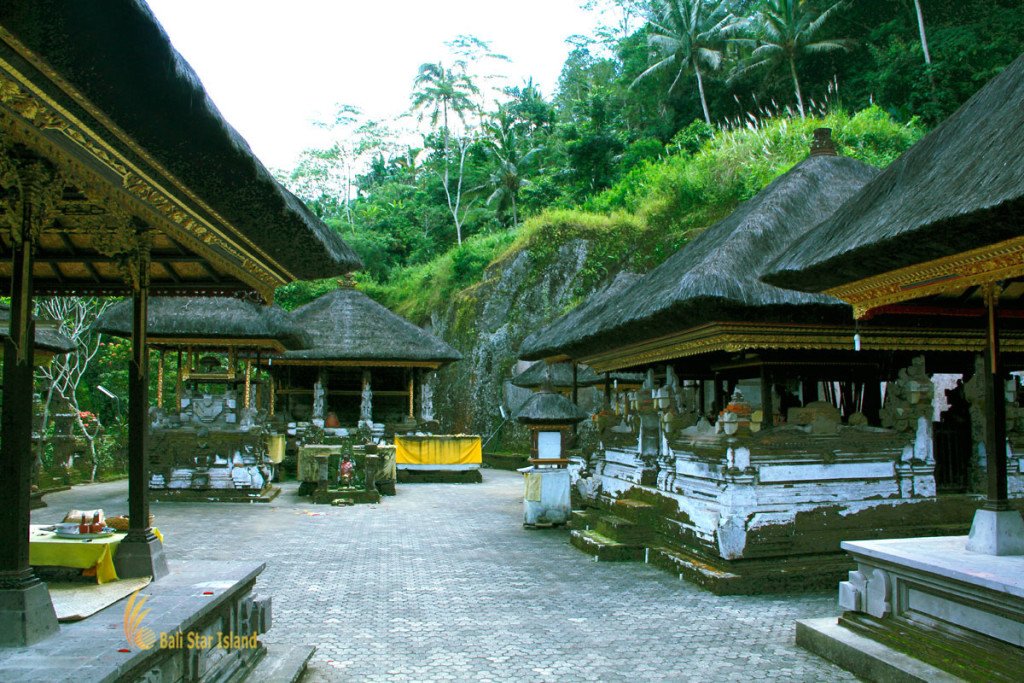
Gunung Kawi Temple is a Hindu Temple complex from the Stone era located in Gianyar Regency. This is referred to the Tengkulak A inscription on 945 saka (Balinese calendar) that was released by Marakata King. Gunung Kawi Temple is an ancient heritage complex located on the Pekerisan River (the name of the river by Katyangan Amaravati). There are 3 temples with similar names to Gunung Kawi in Bali such as Gunung Kawi in the Sebatu countryside, Gunung Kawi Temple in the Keliki countryside and Gunung Kawi Temple in the Babitra countryside.
Gunung Kawi Temple, the ancient omission complex
It is consisted of 2 types:
Temple Complex
Temple complex is consisted of 2 consecution. The consecution in east side of Pekerisan River is consisted of 5 units and the consecution at west side of river is 5 units, in the north is 4 units and 1 unit is located far in south side separate from the others. On the above temple consecution in particular to the East side River, there is an article written based on Kediri word type sounding ‘Haji Lumahing Jalu’. Haji means a king, the Lumah means a temple or Sidha Dewata means to return to the nature of deity and Ing Jalu means in Pekerisan. The Jalu mean the Keris literal. The temple which is located in the west side of river related to all king concubines.
Buddhist Temple Complex Buddhist Temple Complex is used as a residence and as place for meditation. It is consisted of some nooks and it is located in the cross east of Pakerisan River. Other nooks are located spread out and near the temple bunch.
Nyepi Laut Bali gives travellers a chance to discover a quieter side of the island’s living culture. Imagine the waters around Nusa Penida without fast boats crossing the sea, fishermen heading out for the day, or snorkelling boats carrying visitors to nearby reefs. For one special day, the ocean becomes remarkably quiet. Known locally as […]
Royal Palaces in Bali reveal a fascinating side of the island that goes far beyond beaches, temples, and tropical landscapes. Behind carved gates and peaceful courtyards, these historic puri tell stories of Bali’s former kingdoms. At the same time, many continue to play a role in the island’s cultural life. Rather than having one single […]
Manene Toraja, traditionally written as Ma’nene, offers travelers a fascinating insight into how Torajan communities understand family, memory, and respect for their ancestors. In the highlands of South Sulawesi, some families continue this meaningful ritual by reopening ancestral resting places, carefully tending to the preserved remains of relatives, and dressing them in fresh clothing. At […]






Comment (0)